Here's a scenario that plays out far more often than people realize.
Picture someone in their mid-40s — put-together on the outside — grieving a cat. Fourteen years together. The cat slept on her pillow every single night.
The cat died on a Tuesday. She missed three days of work.
And when she finally — finally — opened up to a colleague about why she'd been such a wreck, the response was something like: "Oh. It was just a cat though, right? You can get another one."
So she shut down. Didn't mention the cat to anyone for months after that, convinced there was something fundamentally broken inside her because she couldn't stop crying over, quote, "just an animal."
Nothing broken. Not even close.
What she was dealing with is called disenfranchised grief, and it is one of the quietest, most unintentionally cruel things we do to each other.
The term sounds clinical but the feeling isn't
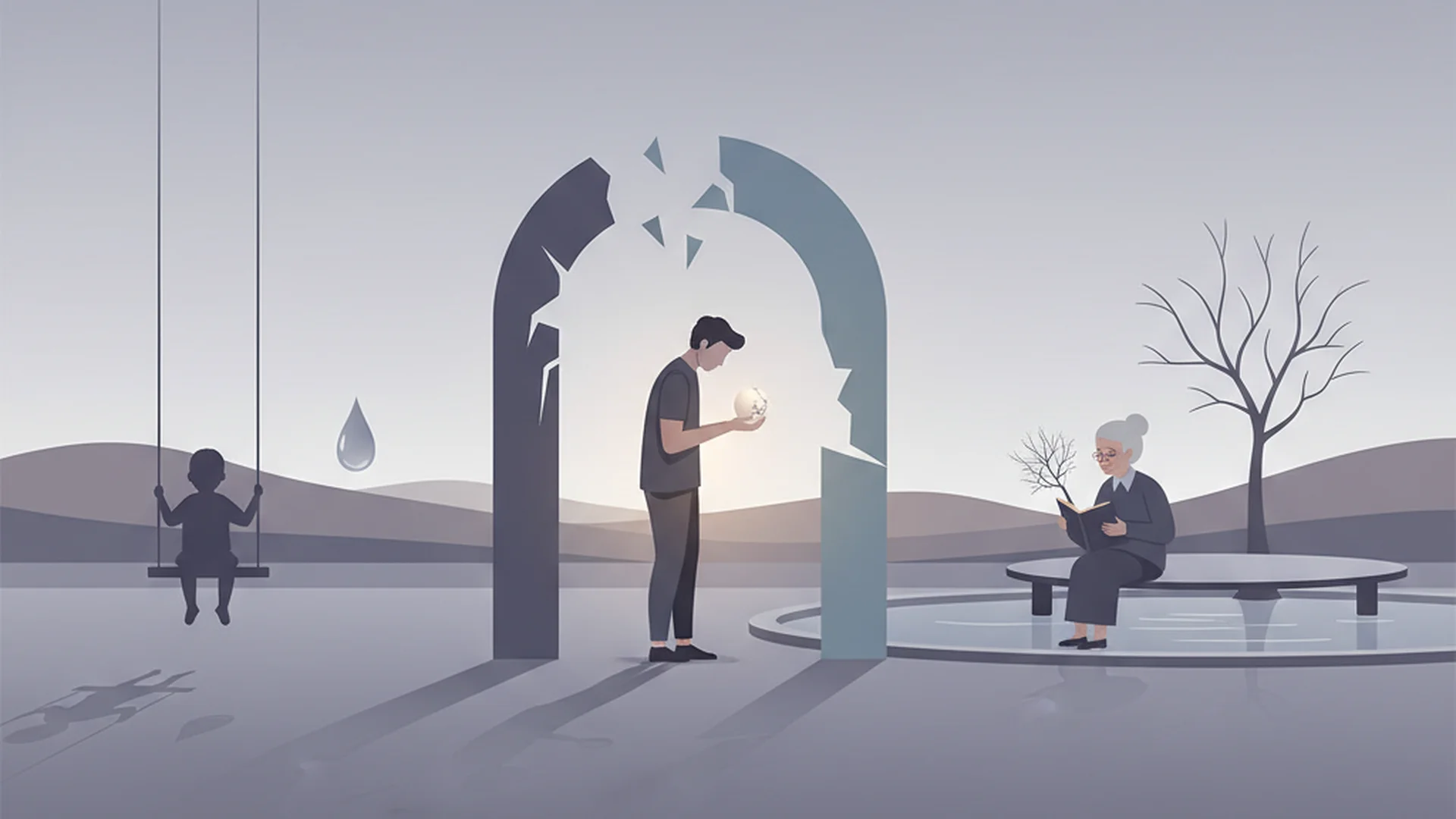
Kenneth Doka, a bereavement researcher, coined it, and his definition boils down to grief that society won't let you have. Grief that "cannot be openly acknowledged, publicly mourned, or socially supported." Which, if you strip away the academic language, just means: the world decided your pain doesn't matter.
And that is where it gets especially hard. Because now you have two problems instead of one.
You're hurting. That's problem one. Fine. Grief does that. But then there's this whole second thing layered on top — this creeping shame, this voice in your head going am I being dramatic? Should I be over this already? What's wrong with me?
That second thing makes the first thing so much worse. It cannot be overstated.
The APA and other clinicians note that a meaningful share of bereaved adults can develop Prolonged Grief Disorder, and the risk rises when someone feels like they can't talk about their loss. When there's no funeral to attend. No sympathy cards trickling in. No casseroles on the porch. Just... silence. And you, alone with it.
The stuff people don't think "counts"
This is the elephant in the room. When people hear "disenfranchised grief," their minds go straight to pet loss. Fair enough. But it's so much bigger than that, and this is where things get messy.
An ex dies and you're not "supposed" to care. Consider someone married for twelve years, divorced for five, whose former spouse dies in a car accident. They're a wreck. Can't eat. Can't function. And everyone around them keeps saying variations of "but you were divorced" — as if a legal document just deletes twelve years of memories? Of inside jokes and Christmas mornings and fighting about the thermostat? Grief doesn't check whether you've filed paperwork. The same thing happens with estranged parents. Someone who hasn't spoken to a parent in six years, and then that parent dies and it hits like a freight train, and they don't understand why. The grief isn't just about who that person was at the end — it's about who they were supposed to be, and every version of the relationship that will never get a second chance now.
Losses that have nothing to do with death. This one trips people up. Getting laid off from a job you'd had for 15 years. A miscarriage at 11 weeks. Your best friend since college just... stops returning your calls one day and you never find out why. Retirement, even — it can quietly devastate people who built their entire identity around their work. Moving away from a neighborhood. Losing your health. These are real losses. The nervous system doesn't register the difference — a broken bond is a broken bond, full stop. But try explaining at Thanksgiving that you're grieving a job. See how that lands.
Kids and older adults — the two groups everyone forgets about. Children are excluded from funerals all the time. The logic is supposedly "it'll traumatize them" or "they won't understand." Meanwhile, a six-year-old knows something terrible happened, nobody will explain it, and she's processing the whole thing alone in her bedroom with zero tools and zero vocabulary for what she's feeling. And on the other end — when an 85-year-old loses a spouse of sixty years, somehow people think they should handle it better because they're older. As if six decades of shared life makes the empty chair at breakfast easier.
Deaths that carry a whisper. Overdose. Suicide. AIDS. Plainly: if someone you loved died from one of these, you already know what this means. The grief is hard enough. The judgment from other people about how the person died — that's the part that makes it unbearable. And that shame, that pressure to stay quiet, is a direct path to complicated grief, which is a separate and much harder thing to climb out of once it takes hold.
If you are having thoughts of suicide or are in crisis, you do not have to carry it alone. In the U.S., you can call or text 988 to reach the Suicide & Crisis Lifeline, any time, for free and confidential support. If someone is in immediate danger, call 911.
Can we talk about the internet for a second?
This keeps coming up, and our culture hasn't fully caught up to it yet.
People build real relationships online. Not casual follows — actual, genuine, talk-every-day friendships. Guild mates in an online game you've played together for years. A group chat that's been going since 2019. Someone on a forum who talked you through your divorce at 2am. Those bonds are real. The brain doesn't care whether you met the person at a coffee shop or on a chat server at midnight — the attachment forms the same way through the same neural pathways with the same emotional weight.
So when one of those people dies? Yeah. It wrecks you.
And then you face the added difficulty of nobody in your offline life understanding why. "You never even met them in person," they say — which is rarely the comfort it is meant to be.
And then — because of the way our devices work — social media starts resurfacing them. Those "On This Day" memories. Tagged photos from two years ago. The algorithm cheerfully suggesting you check out their profile. One way people describe it: "a scab that gets ripped off every single time I open my phone." You could be having an okay Wednesday, making dinner, and then ping — a feed shows you a photo with the friend who died, and suddenly it's that month all over again and you're standing in the kitchen in tears.
If this is happening to you: mute the keywords. Turn off memory features. Unfollow what you need to unfollow. It can feel like betrayal — like if you mute their name you're abandoning them. You're not. You're choosing when to remember instead of letting an algorithm ambush you with it. Huge difference.
So what actually helps? (Not the five stages)
This will not walk you through denial-anger-bargaining-depression-acceptance. Partly because Elisabeth Kübler-Ross wrote those stages about people who were dying, not people who were grieving — and somewhere along the way that distinction got lost. But mostly because grief doesn't work like a checklist. It's not a straight line. It's more like a GPS that reroutes a dozen times and sends you down a back road in the wrong direction for a while before, somehow, you arrive.
A few things tend to genuinely help:
Build your own rituals because nobody else is going to. When your grief is disenfranchised — when the loss is a pet or a job or an ex or a friendship — nobody sends flowers. Nobody organizes a meal train. The world just keeps going, and you're supposed to keep up. So you make your own markers. Write a letter to whatever you lost — you don't have to send it anywhere, just write it. Plant something. Light a candle on the anniversary. Some people make a small annual donation to a charity on the date of the loss. Nobody else has to know why. The ritual is yours. That's the whole point.
Find your people, even if you have to look hard. Therapy helps, and it's worth pursuing. But there's also something specific that happens in a peer support group — where you sit in a room or a video call with people who've lost the same kind of thing you've lost — and somebody says "yeah, me too" and something cracks open. Peer support can be a meaningful source of relief for people dealing with unrecognized loss. Hospice organizations, faith communities, and national grief nonprofits are good starting points for finding a group that fits your kind of loss.
Quit telling yourself your grief doesn't count. Easier said than done. You've probably got years of internalized messaging — from family, from coworkers, from society at large — telling you this wasn't a "real" loss, other people have it worse, you should be over it. All of that is wrong. Grief is not a competition, and there's no threshold of tragedy you have to clear before you earn the right to feel bad. You feel it? Then it's real. End of story.
Things people say that make it worse (even with good intentions)
"You can always get another dog."
That sentence is more harmful than it sounds. Because what it really says — maybe without meaning to — is that the specific creature they loved, with its specific weird habits and its specific warm weight on their lap every evening, was interchangeable. Replaceable. Like a toaster. Nobody would say "you can always get another mother," and yet somehow "you can always get another dog" is considered reasonable.
Then there's the phrase "at least." At least you have other children. At least she's not suffering anymore. At least you had 14 good years. Every one of those "at leasts" slams a door shut. It says: here's why your pain shouldn't be as bad as it is. It rarely helps and usually hurts.
One more thing worth naming. Feeling relief when someone dies doesn't make you a terrible person. If you spent three years watching a parent die of Alzheimer's, or if you had an abusive parent, or if the relationship was complicated and painful and exhausting — relief is normal. Expected, even. And it can exist right alongside sadness. Same moment, same breath. Grief is big enough to hold two opposite feelings at once.
Frequently Asked Questions
Is it normal to grieve something that wasn't a death?
I feel like I'm grieving "wrong." Is that a thing?
Can you grieve an ex-partner or someone you were estranged from?
Why does losing someone I only knew online hurt so much?
What's the best thing I can say to someone going through this?
Where to go from here
Look. If you got to the bottom of this article and parts of it made your throat tight or your eyes sting — that's not a coincidence and it's not weakness. That's recognition. And it means the thing you lost mattered, even if nobody around you treated it that way.
You don't need to do anything dramatic right now. Seriously. Maybe just... sit with the fact that your grief is legitimate. That it has a name — disenfranchised grief — and that thousands and thousands of people are walking around carrying the exact same invisible weight. You're not alone in this even though it absolutely, positively feels like you are.
If you want to talk to somebody (and that's worth doing, eventually, when you're ready), it helps to know that grief counseling and therapy are not quite the same thing. Counseling tends to focus on supporting you through a specific loss, while therapy can address deeper or longer-standing patterns — and either one can be a good fit depending on your situation.
And if you're here because you're trying to support someone else through this kind of loss? The best thing you can do — the absolute best, bar none — is just believe them. They say it hurts? It hurts. That's it. That's the whole job.
- 1
- 2
- 3
- 4
- 5
- 6
Informational Purposes Only
This article is for informational purposes only and does not constitute legal, medical, or financial advice. Laws, costs, and requirements vary by location and individual circumstances. Always consult a qualified legal, medical, or financial professional for advice specific to your situation.
Written by
Matt Morgan
Founder & Editor
Matt Morgan is the founder and editor of End of Life Tools, where he researches end-of-life topics from primary public sources and writes plain-language guides. General information only — he is not a licensed professional, and this is not professional advice.
View full profile →Put it into action
Found this helpful?
Explore our free-to-use planning tools to put what you learned into action.