Key Takeaways
- Personalized caskets are a major trend driven by a shift toward "Celebrations of Life."
- The FTC Funeral Rule allows families to buy custom caskets from third-party vendors.
- New technologies like AI design and QR code integration are standard for 2025-2026.
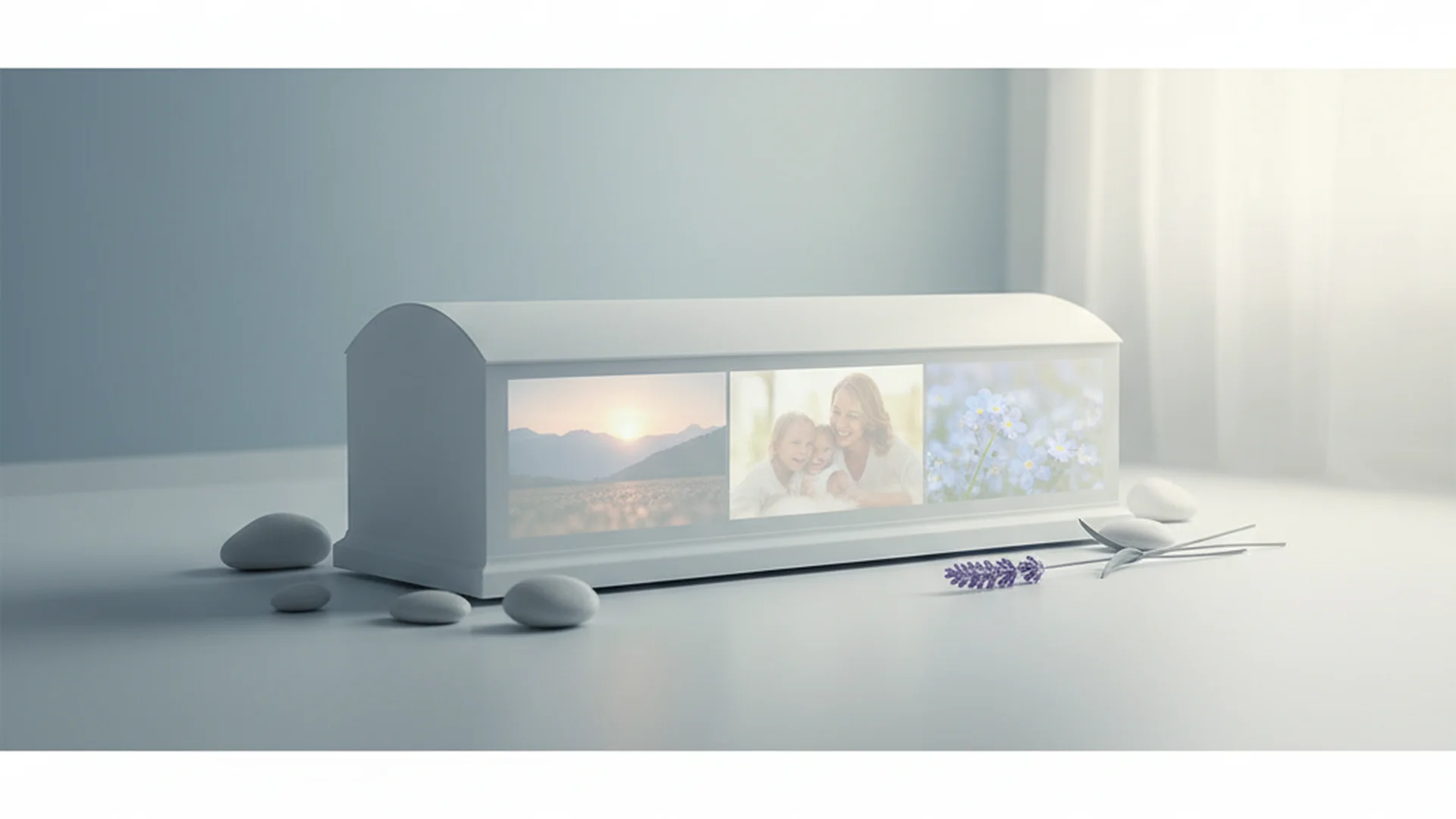
Picture caskets are transforming the modern funeral industry, moving away from the "one-size-fits-all" approach of the past and toward a deeply personal celebration of a life well-lived. As a final expense financial planner, I often see families looking for ways to make a service feel unique without breaking the bank. A personalized photo casket (also known as an image casket) offers a high-impact visual tribute that tells a story through photography, graphics, and custom themes.
Whether it is a landscape of a beloved hometown, a collage of family memories, or a vibrant tribute to a lifelong hobby, these specialty products are becoming the centerpiece of contemporary funeral services. In this guide, we will explore the technology, regulations, and design choices that define this growing segment of the memorial market.
The Rise of the Personalized Photo Casket
The global casket market is projected to reach nearly $6 billion by 2025, but the nature of what people are buying is shifting. While traditional wood and metal units remain popular, there is a distinct move toward Specialty Casket Options that offer more than just a place of rest.
The modern "Celebration of Life" movement has fueled the demand for caskets that serve as a canvas. For families who choose traditional burial, a personalized casket provides a focal point for the service. For those choosing cremation, "cremation-ready" picture caskets—often made of combustible bamboo or high-grade cardboard—allow for a beautiful viewing followed by an eco-friendly process.
Design Trends and Technology for 2025–2026
The technology behind image caskets has advanced rapidly. We are no longer limited to simple stickers or low-resolution prints.
AI-Assisted Design and Restoration
In 2025, artificial intelligence has become a standard tool for casket designers. AI is now used to restore old, grainy family photos from decades ago, sharpening them for large-scale printing. Designers can also use AI to generate "heavenly landscapes" or serene backgrounds that blend seamlessly with the primary photos of the deceased.
Smart Caskets: QR and NFC Integration
A significant trend for 2026 is the "Smart Casket." Many personalized photo caskets now include a discreet QR code or an NFC (Near-Field Communication) tag embedded in the design. When attendees scan the code with their smartphones, it launches a digital memorial gallery, a video tribute, or a guestbook where they can upload their own photos in real-time.
Textured and 3D Finishes
Beyond the visual, tactile elements are now possible. Using 3D printing and raised UV coatings, manufacturers can create "textured" wraps. For example, a Sports Team Themed Casket might feature a surface that actually feels like the pigskin of a football or the grain of a basketball.
| Feature | Standard Picture Wrap | 2025-2026 Premium Wrap |
|---|---|---|
| Image Quality | 300 DPI Flat Print | High-Def with Raised UV Texture |
| Interaction | Visual Only | QR Code/NFC Digital Integration |
| Material | Vinyl on Steel | Eco-friendly Bio-wraps |
| Design Tool | Manual Graphic Design | AI-Enhanced Photo Restoration |
Technical Requirements for the Perfect Image Casket
To ensure a personalized photo casket looks professional and respectful, several technical benchmarks must be met.
High-Resolution Imagery
Because a casket wrap is a large-format print, low-resolution images from social media often won't suffice. Experts recommend images be at least 300 DPI (dots per inch). If you are providing a digital file, it should be at least 1500–2000 pixels wide to avoid pixelation.
Installation and Turnaround
One of the biggest misconceptions is that custom work takes weeks. Modern custom wraps can be designed, printed, and heat-applied to a casket in as little as 24 to 48 hours. This allows even families dealing with a sudden loss to incorporate a personalized design into the scheduled service.
Common Mistakes to Avoid
When planning a personalized tribute, it is easy to get caught up in the emotion and overlook practical details.
- The Copyright Trap: Families often want to use professional sports logos (NFL, MLB) or Disney characters. However, reproducing trademarked logos for commercial sale is illegal without a license.
- Solution: Use the team’s colors and generic imagery (e.g., a stadium sunset or a generic baseball and bat) to evoke the same feeling without legal delays.
- Size Miscalculation: Caskets come in standard and oversized dimensions. A wrap designed for a standard 28-inch casket will not fit an oversized model. Always verify the specific brand and model dimensions before the design phase begins.
- The Preservation Myth: Do not assume that a more expensive "sealer" or a custom-wrapped casket will preserve a body forever. No casket can permanently stop the natural process of decomposition; the value of a picture casket is in its memorial impact, not its preservation capabilities.
Navigating the FTC Funeral Rule
Many families feel pressured to buy everything directly from the funeral home. However, under the FTC Funeral Rule, you have the right to purchase a casket from any third-party vendor.
- The funeral home must accept a casket you bought elsewhere.
- They cannot charge you a "handling fee" for doing so.
- They cannot require you to be present when the casket is delivered.
This rule is vital for those seeking a specialized personalized photo casket that a local funeral home might not carry in their standard inventory.
Frequently Asked Questions
Is it "bad luck" to put photos on or in a casket?
Can I take a picture of the deceased in their personalized casket?
How much does a full image casket wrap cost?
Can these be used for green burials?
Conclusion
A picture casket is more than just a vessel; it is a final statement of identity. From the integration of AI and QR codes to the legal protections afforded by the FTC, families today have more power than ever to create a truly unique farewell. By focusing on high-resolution imagery and understanding the technical requirements, you can ensure that the final tribute is as vibrant and memorable as the person it honors.
Planning for the Future?
Learn how to include specialty products in your final expense plan.
Contact Sarah GoldbergWritten by Sarah Goldberg
Our team of experts is dedicated to providing compassionate guidance and practical resources for end-of-life planning. We're here to support you with dignity and care.