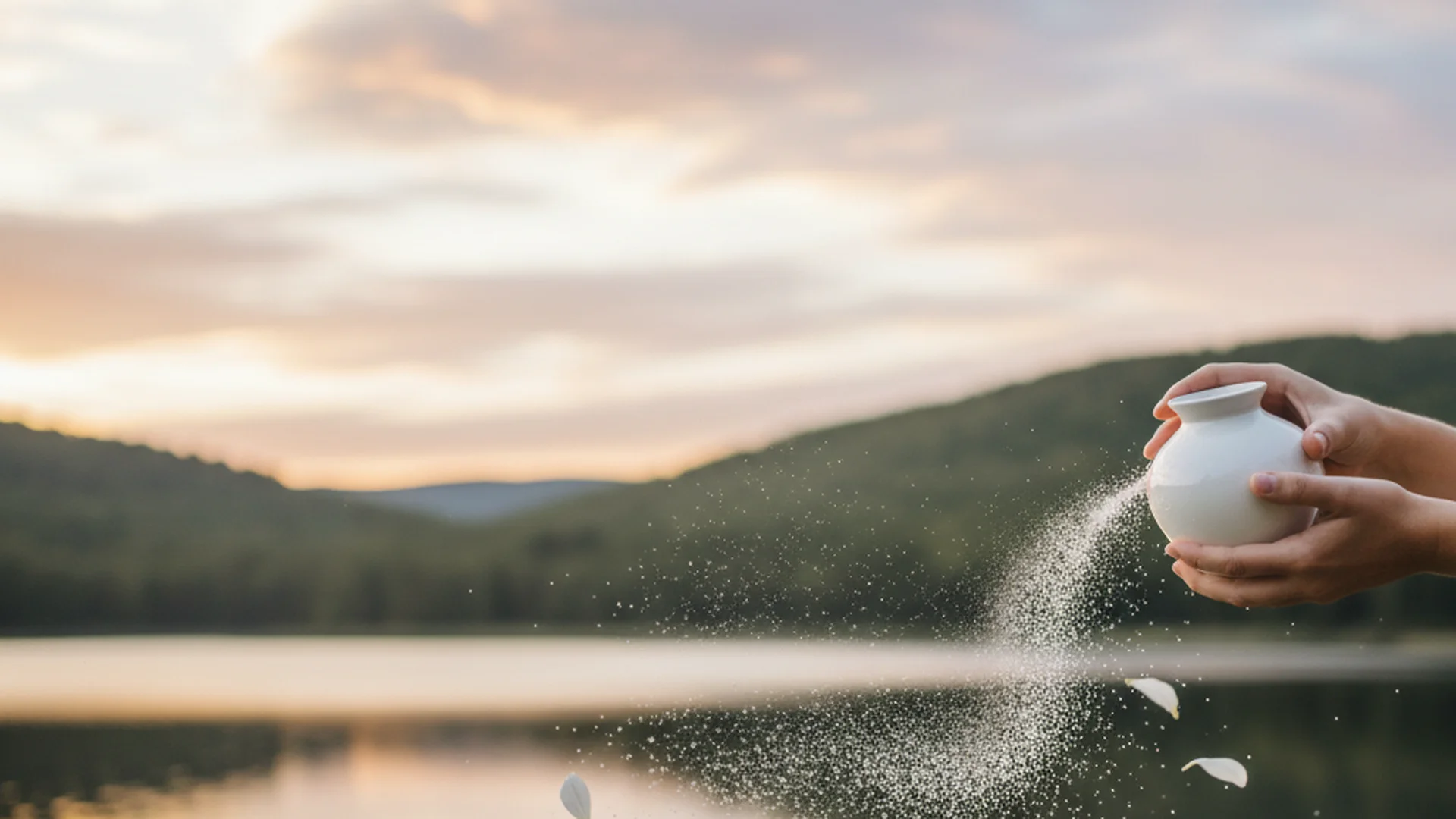
Key Takeaways
- Understand the legal requirements for sea and land scattering.
- Explore modern trends like aerial drone scattering and tree urns.
- Learn the "Upwind Rule" and other expert techniques for a respectful ceremony.
Deciding what to do with a loved one’s remains is one of the most personal steps in the grieving process. As cremation rates continue to soar globally, more families are moving away from traditional burials and toward the ritual of scattering. Whether you are planning a quiet ceremony in a beloved garden or a grand gesture at sea, this scattering ashes guide provides the logistical, legal, and emotional framework you need to make an informed decision in 2025 and 2026.
In my years as a Final Expense Financial Planner, I have seen a massive shift in how families approach the "final goodbye." It is no longer just about disposal; it is about creating a lasting legacy that reflects the personality of the deceased.
The Rising Preference for Cremation (2025–2026)
Cremation has officially moved from a "budget alternative" to the cultural standard in major English-speaking countries. This shift is driven by a mix of declining religious taboos, lower costs, and a growing desire for environmental sustainability.
According to the National Funeral Directors Association (NFDA), the U.S. cremation rate is projected to hit 63.4% in 2025. To put that in perspective, that is more than double the rate of traditional burials. By 2045, experts believe over 80% of Americans will choose cremation.
The trend is even more pronounced elsewhere. In the UK, over 70% of funerals are cremations, and Canada is leading the way with a rate of 76.7% as of 2024. If you are currently navigating this process, you are part of a global movement toward more flexible memorial options. For those still in the early stages of planning, you might find our Complete Guide to Cremation helpful for understanding the baseline requirements.
Scattering Ashes Legally: What You Need to Know
A common misconception is that once you have the cremated remains, you can scatter them anywhere. While the laws are generally more flexible than those for body burial, "anywhere" is rarely the case.
Private vs. Public Land
To scatter ashes on private property, you simply need the owner's permission. If you own the land, you are free to proceed. However, if you are looking at public land—such as a city park or a state forest—you almost always need a permit.
- National Parks: Most U.S. National Parks allow scattering, but they require a "Special Use Permit." Each park has its own rules (e.g., you must be away from developed areas, trails, and water sources).
- Local Parks: Municipalities often have "Leave No Trace" policies. Scattering without a permit can sometimes be classified as littering, which carries fines.
Scattering at Sea
If you are planning a maritime farewell, you must adhere to the Federal Clean Water Act. In the U.S., the Environmental Protection Agency (EPA) mandates that scattering must take place at least three nautical miles from the shore.
Where to Scatter Ashes: Popular and Creative Locations
When choosing where to scatter ashes, think about the places that held meaning for your loved one. Here are the most common options available in 2025:
1. Memorial Gardens and Cemeteries
Many modern cemeteries now offer "scattering gardens." These are beautifully landscaped areas designed specifically for this purpose.
- The Benefit: You have a permanent, maintained location to visit.
- The Cost: While cheaper than a plot, there is usually a fee for the use of the garden and the recording of the location in the cemetery’s registry.
2. The Great Outdoors (Mountains and Trails)
For the hiker or nature lover, a mountain peak or a favorite forest trail is a popular choice. However, high concentrations of ashes can actually harm sensitive plant life because of their high pH levels.
- Expert Tip: Use the "trenching" or "raking" methods described below to minimize environmental impact.
3. International "Travel Scattering"
A growing trend for 2025 is "Travel Scattering." This involves taking small portions of ashes on a commemorative trip. For example, a family might scatter a small amount at a childhood home in Italy, another portion at a favorite beach in Florida, and keep a small amount in a companion urn.
Expert Techniques for Scattering
Scattering is a ritual, not just a physical act. To ensure the ceremony goes smoothly, professionals recommend several specific methods.
The Upwind Rule
This is the most important piece of practical advice: Always stand with the wind at your back. Cremated remains are not just fine dust; they contain varying weights of particles. Releasing them into the wind will cause them to blow back onto you and the other participants, which can be a distressing experience during a solemn moment.
Common Scattering Methods
| Method | Description | Best For |
|---|---|---|
| Casting | Releasing the ashes into the air at waist or shoulder height. | Open spaces, mountain tops, or windy ridges. |
| Trenching | Digging a shallow (2-3 inch) trench, placing ashes inside, and covering with soil. | Gardens, woods, or private backyards. |
| Raking | Spreading ashes thinly over the ground and lightly raking them into the topsoil. | Memorial gardens or golf courses (with permission). |
| Water Scattering | Using a specialized biodegradable urn that floats for a few minutes before sinking. | Oceans, deep lakes, and professional sea services. |
Timeline: How Long Can You Wait?
Unlike traditional burials, which usually happen within a week of death, scattering offers total flexibility. There is no legal timeline for when you must scatter.
However, be aware of "direct cremation" logistics. Since direct cremation is on the rise (as it skips the traditional funeral home viewing), many families hold onto the remains for months—or even a year—until the perfect anniversary or family gathering occurs.
Modern Trends for 2025 and 2026
The "death care" industry is becoming increasingly tech-forward and eco-conscious.
Eco-Friendly Tree Urns
One of the most requested options today is the "Bio-Urn." The ashes are placed in a biodegradable container with a specific soil medium and a seed or sapling. The urn is buried, and the ashes provide nutrients to the growing tree. This turns a site of loss into a living memorial.
Aerial Drone Scattering
For those who want to reach inaccessible mountain peaks or specific GPS coordinates, professional drone services are now available. These services provide video footage of the release, allowing the family to witness the moment from a safe or comfortable location.
GPS Marking and Digital Memorials
Experts now suggest recording the exact GPS coordinates of the scattering site. Apps and digital maps allow you to create a "digital memorial" that future generations can visit via their smartphones, even if the physical landscape changes over time.
Common Mistakes to Avoid
Even with the best intentions, things can go wrong during a scattering ceremony. Here are the most frequent errors:
- The "Littering" Misconception: Thinking that ashes are "natural" and therefore don't require permission. Always check local ordinances to avoid fines.
- Leaving Visible Clumps: Pouring all the ashes in one pile is distressing to others and can damage the grass. Use the "raking" method to ensure they integrate with the environment.
- Non-Biodegradable Extras: Throwing plastic flower wrappings or synthetic ribbons into water along with the ashes. Only 100% organic materials should be used.
- Assuming All Water is Equal: You cannot generally scatter in local ponds or small streams, as these are often connected to local drinking water or sensitive inland ecosystems. Stick to the ocean or large, permitted lakes.
- Opening the Container for the First Time at the Site: Ashes are not "fine dust"; they have a gritty, sand-like texture and contain small bone fragments. Look at the remains beforehand so you aren't shocked or surprised during the emotional peak of the ceremony.
Real-World Examples of Scattering Ceremonies
Example 1: The "Hiker's Farewell"
A family in Colorado chose to scatter their father’s ashes at the peak of a "Fourteener" (a mountain over 14,000 feet). They used the trenching method near a rock formation he loved. Because they stood with the wind at their backs and covered the trench with native soil, they left no trace, adhering to both park rules and environmental best practices.
Example 2: The Multi-Location Journey
A daughter chose to divide her mother’s remains. She kept a small portion in a biodegradable urn for a local service, but took the rest on a year-long journey to three different countries her mother had always wanted to visit. This "Travel Scattering" allowed her to process her grief over time rather than in a single day.
Example 3: The Backyard Legacy
A family used a tree urn to plant a Japanese Maple in their private backyard. This allowed them to scatter the remains "legally" on their own property while creating a living memorial that their children could grow up with.
Frequently Asked Questions
Is it legal to scatter ashes anywhere?
Can I take ashes on an airplane?
Can ashes be divided among family members?
Are ashes harmful to the environment?
How do I know what happens during the cremation process?
Conclusion
Scattering ashes is a powerful way to return a loved one to the elements and celebrate their life in a place that held meaning for them. Whether you choose a traditional scattering garden, a high-tech drone release, or an eco-friendly tree urn, the most important factor is that the decision feels right for your family and honors the wishes of the deceased.
By following the legal guidelines for scattering ashes legally and using expert techniques like the upwind rule, you can ensure that your final goodbye is as beautiful and respectful as the life it commemorates.
Written by Sarah Goldberg
Our team of experts is dedicated to providing compassionate guidance and practical resources for end-of-life planning. We're here to support you with dignity and care.