Key Takeaways
- Shroud burials reduce carbon emissions by over 200 lbs compared to conventional methods.
- Only 100% natural, biodegradable fibers like linen or organic cotton should be used.
- Preparation requires a rigid lowering board and natural-fiber handles for safety and dignity.
In an era where environmental stewardship and personal autonomy are at the forefront of end-of-life planning, shroud making for burial has emerged as a deeply meaningful alternative to the traditional funeral industry. As we move into 2025 and 2026, the "green burial" movement is no longer a niche subculture but a mainstream shift in how families say goodbye. Choosing to create a DIY shroud or a custom burial cloth allows for a return to ancient human traditions while significantly reducing the ecological footprint of a final farewell.
The Rise of the Green Burial Movement
The data surrounding the funeral industry shows a massive pivot toward natural options. The green burial industry is projected to be a $2 billion industry by the end of 2025, growing at a steady rate of 8% annually. This shift is driven by a desire for simplicity and sustainability. According to the 2025 NFDA Consumer Awareness and Preferences Report, 61.4% of consumers are now interested in exploring "green" funeral options—a notable jump from just 55.7% in 2021.
The environmental argument is compelling. A conventional burial, involving a steel casket and a concrete vault, emits approximately 250 lbs of carbon. In contrast, a natural shroud burial (without a vault) actually sequesters approximately 25 lbs of carbon. Furthermore, while a preserved body in a steel casket can take decades to decompose, a body in a natural linen burial cloth can return to the earth in as little as 1 to 2 years.
Choosing Materials for a DIY Shroud
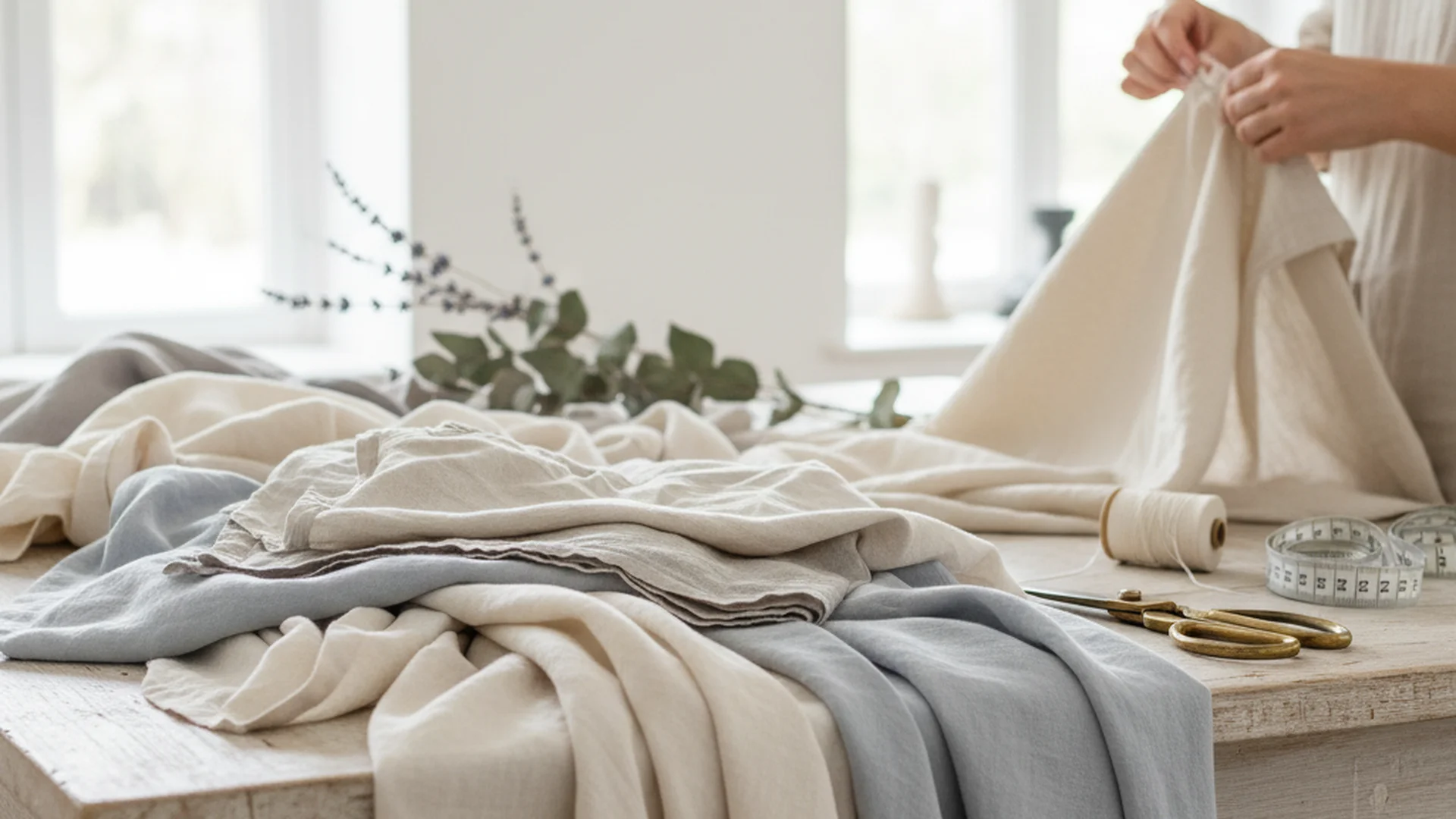
When you begin the process of shroud making for burial, the most critical factor is the composition of your fabric. To ensure the body can return to the earth naturally, every component must be biodegradable.
100% Natural Fibers
The "gold standard" materials for a burial cloth include:
- Unbleached Muslin: Affordable, easy to work with, and highly biodegradable.
- Linen: A classic, ancient choice that is exceptionally strong.
- Hemp: One of the most sustainable fabrics available in 2025.
- Organic Cotton: Ensure it is free of synthetic dyes.
- Silk: A luxurious, natural protein fiber that breaks down efficiently.
Thread and Fasteners
A common mistake in DIY shroud construction is using standard all-purpose thread. Most modern thread is made of polyester (plastic). For a truly green burial, you must use 100% cotton or silk thread. If you are using ties or "shroud pins," ensure they are made of wood, bone, or untreated metal that will oxidize and disappear over time.
Design and Dimensions: The Six-Foot Rule
Creating a shroud is less about complex tailoring and more about secure wrapping. For a standard adult, experts recommend a fabric piece roughly 1.5 times the height of the person and 6 to 9 feet wide. This allows for enough material to tuck under the head and feet and to wrap the body three times for a secure, dignified appearance.
The Importance of a Rigid Base
While the shroud itself is soft, the logistics of a burial require stability. In most "hybrid" or "natural" cemeteries, a casket isn't required, but a rigid board or tray is usually mandatory for the lowering process.
If you are considering building your own support structure, you might also be interested in our guide on Casket Building DIY (Options and Timeline).
Practical Logistics and Legal Standing
One of the most common misconceptions is that burial in a shroud is "illegal" or "fringe." In reality, natural burial is legal in all 50 U.S. states, the UK, and Canada. However, the hurdle usually lies in cemetery bylaws.
- Conventional Cemeteries: Often require a concrete burial vault or grave liner. While you can be buried in a shroud inside a vault, it defeats the "green" purpose.
- Hybrid Cemeteries: These are traditional cemeteries that have designated specific sections as "shroud-only" zones where vaults are prohibited.
- Conservation Burial Grounds: These are the strictest sites, requiring 100% biodegradable materials and often prohibiting traditional headstones in favor of native plantings.
Shroud Preparation Timeline
Because green burials exclude the use of toxic embalming fluids, the timeline for shroud making and wrapping is tighter than a traditional funeral.
| Timeline | Action Step |
|---|---|
| Months/Years Prior | Select and wash 100% natural fabric; personalize with dyes/embroidery. |
| 0–12 Hours Post-Death | Clean and prepare the body (Ghusl, Tahara, or family washing). |
| 12–24 Hours Post-Death | Wrap the body in the shroud; secure with natural ties. |
| 24–72 Hours Post-Death | Burial or cremation (the standard window without embalming). |
If the burial cannot occur within 48 hours, the body must be kept cool. You can find detailed instructions on this in our article on Cooling Body at Home (Options and Timeline).
2025–2026 Trends: Artistic Ritualization
The modern approach to shroud making for burial has become an artistic and community-driven event. Many families are hosting "shroud-making workshops" as a way to process grief.
- Botanical Eco-Printing: This involves using real leaves, bark, and flowers to steam-dye patterns onto the fabric, creating a shroud that looks like a forest floor.
- Potato Stamping: Using natural vegetable dyes and carved potatoes to add personal symbols or messages to the burial cloth.
- The Living Shroud: Many people are now making their shrouds years in advance and using them as bedcovers or wall hangings. This allows the fabric to "live" with the person, gaining personal history before it serves its final purpose.
Common Mistakes to Avoid
- The "Mushroom Suit" Fallacy: While "Mushroom Burial Suits" went viral years ago, 2025 data shows a shift back to simple cotton and linen. Many early mushroom suits faced scientific scrutiny regarding their actual efficacy, and some manufacturers have gone defunct. Simple natural fibers are just as effective for decomposition.
- Forgetting Lowering Straps: If your shroud does not have reinforced handles (we recommend at least 3-4 per side), the pallbearers will struggle to lower the body with dignity. Use heavy-duty cotton webbing for handles.
- Synthetic Embellishments: Many families mistakenly use satin ribbons or lace, which are almost always made of polyester. Ensure all ribbons, lace, and decorations are 100% natural.
- Inadequate Wrapping: If the shroud is too loose, the body may shift. Always use the "three-layer wrap" method and secure the midsection, knees, and ankles with natural ties.
Frequently Asked Questions
Can I make my own burial shroud?
Is a coffin still required if I use a shroud?
Can a shroud be used for cremation?
How do I find a cemetery that allows shroud burial?
Conclusion
Shroud making for burial is more than just a DIY project; it is a profound act of love and a commitment to the earth. By choosing natural fibers and avoiding synthetic additives, you allow the cycle of life to complete itself in a way that is both beautiful and sustainable. Whether you are planning for yourself or a loved one, the process of creating a burial cloth provides a tangible way to connect with the reality of our shared mortality while honoring the environment.
Ready to Start?
Begin your journey toward a more natural and personal end-of-life plan today.
Explore More ResourcesWritten by Sarah Goldberg
Our team of experts is dedicated to providing compassionate guidance and practical resources for end-of-life planning. We're here to support you with dignity and care.