Key Takeaways
- Sikh funerals (Antam Sanskar) are a celebration of the soul's reunion with God.
- Cremation is the standard practice, typically occurring within three days.
- Modest dress and head coverings are mandatory for all attendees.
In the Sikh faith, death is not viewed as a terminal end but as a natural progression of the soul. Known as Antam Sanskar (the final rite or last transition), Sikh funeral traditions are rooted in the belief that the soul is an eternal spark of the Divine, currently on a journey to reunite with its Creator, Waheguru. Unlike many Western traditions that focus heavily on the loss of the physical form, a Sikh funeral is a profound "celebration of the soul," marked by prayer, acceptance, and a deep sense of peace.
Understanding these traditions is essential for anyone attending a service or supporting a Sikh friend during a time of loss. This guide provides a comprehensive look at the rituals, etiquette, and evolving modern practices of Sikh funerals for 2025 and 2026.
The Philosophy of Antam Sanskar
To understand Sikh funeral traditions, one must first understand the concept of Hukam—God’s Will. Sikhs believe that birth and death are preordained by the Creator. Therefore, while sadness is natural, extreme public displays of grief, such as wailing or dramatic mourning, are discouraged. Instead, the community focuses on Chardi Kala (eternal optimism) and the belief that the deceased has finished their earthly duty.
The term "Antam Sanskar" literally translates to "the last rite of passage." It is the final of the four main life stages in Sikhism. Because the body is seen as a temporary vessel or "shell" for the soul, the focus of the funeral is entirely on the spiritual transition rather than the preservation of the physical remains.
Preparation of the Body and the 5 K’s
The preparation of the deceased is an intimate process usually handled by the family. In 2025, while many families utilize funeral directors for logistics, the ritual washing and dressing are still frequently performed by close relatives or members of the local Sangat (congregation).
The Ritual Bathing
The body is washed with yogurt and water while prayers (Gurbani) are recited. After the bath, the deceased is dressed in clean, usually white, clothing.
The Five Articles of Faith (The 5 K’s)
For an initiated (Amritdhari) Sikh, it is mandatory that the five articles of faith remain on the body. These are:
- Kesh: Uncut hair (which is covered by a turban or scarf).
- Kangha: A small wooden comb tucked into the hair.
- Kara: An iron or steel bracelet.
- Kirpan: A ceremonial sword.
- Kachera: Traditional cotton undergarments.
The Cremation Ceremony: Rites and Rituals
Sikh cremation is the most common method of disposal, chosen by approximately 90% of families globally. While burial is permitted in circumstances where cremation is impossible—such as at sea or in regions with strict legal prohibitions—fire is the traditional element used to return the body to the earth.
The Funeral Procession
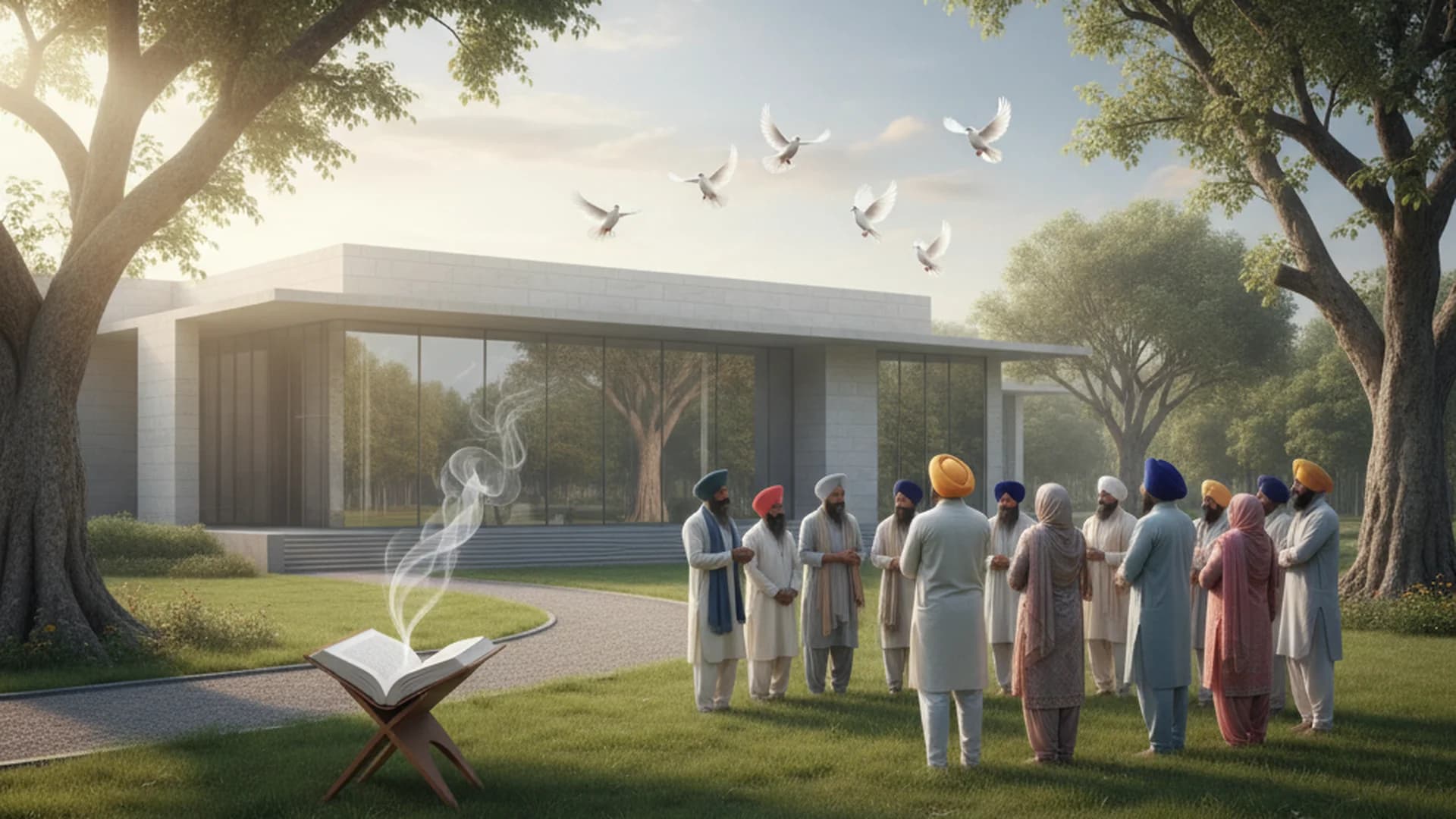
The service often begins at the family home or a funeral parlor, where the "Antim Ardas" (Final Prayer) is said before the body is taken to the crematorium. During the procession, mourners often chant "Waheguru" (The Wonderful Enlightenment).
At the Crematorium
Unlike many Western services where the cremation happens behind closed doors, roughly 75% of Sikh families choose to witness the lighting of the pyre. In modern crematoria, this involves the eldest son or a close male relative pressing the button to start the process.
During this time, the Kirtan Sohila (night prayer) is recited. This prayer is significant because it is the same prayer Sikhs say every night before sleep, symbolizing that death is merely a long sleep before awakening in the presence of the Divine.
| Ritual Component | Traditional Practice | Modern Adaptation (2025) |
|---|---|---|
| Prayer | Ardas and Sohila | Often live-streamed for global family |
| Lighting | Eldest son/relative | Close female relatives increasingly participate |
| Location | Outdoor pyre (India) | Indoor crematorium or Aquamation |
Post-Funeral Traditions and the Mourning Period
After the cremation, the family and mourners gather at the Gurdwara (Sikh place of worship) or the family home. This marks the beginning of the final devotional readings.
The Akhand Paatth
The most important post-funeral rite is the reading of the entire Guru Granth Sahib (the Sikh holy scripture). This can be an "Akhand Paatth" (uninterrupted reading over 48 hours) or a "Sehaj Paatth" (reading taken over 10 days). The conclusion of this reading marks the formal end of the funeral rites.
Ash Scattering
Nearly 80% of Sikh families scatter the ashes in flowing water. While many still wish to take ashes to Kiratpur Sahib in Punjab, India, there is a significant trend in 2025 toward using local rivers or seas in countries like the UK, Canada, and the USA. This shift is supported by local Sikh Councils to reduce the environmental impact of international travel.
Attendance Etiquette for Non-Sikhs
If you have been invited to a Sikh funeral, your presence is a valued gesture of support. However, there are specific cultural norms to follow.
What to Wear
In Asian cultures, white is the traditional color of mourning. However, in Western diaspora communities, subdued colors such as black, charcoal, or navy are perfectly acceptable.
- Modesty: Shoulders and legs must be covered.
- Head Covering: This is mandatory for everyone. Men can use a large handkerchief or a provided head cover; women should use a pashmina or scarf.
- Footwear: You will be required to remove your shoes before entering the prayer hall.
Condolences and Gifts
When greeting the family, it is respectful to approach the eldest member first. A simple bow with hands together in a prayer position is the traditional greeting.
- Flowers: While not strictly required, simple white or orange chrysanthemums are appropriate. Avoid elaborate, ostentatious arrangements.
- Food: Bringing a vegetarian dish to the family home after the service is a common and highly welcomed gesture. Sikhism practices strict lacto-vegetarianism in religious contexts, so ensure the food contains no meat, fish, or eggs.
Modern Trends (2025–2026)
The Sikh diaspora continues to adapt ancient traditions to modern environmental and technological realities.
1. Eco-Friendly Transitions (Aquamation)
As of 2025, there is a growing dialogue regarding "Water Cremation" (Aquamation). Since Sikhism views the body as a mere shell, many religious scholars suggest this eco-friendly method—which uses alkaline hydrolysis—is an acceptable alternative to fire cremation. For a deeper look at this process, see our guide on Aquamation Explained.
2. Digital Inclusivity
The use of high-quality live-streaming for the Antim Ardas has become a standard best practice. This allows family members in Punjab or other parts of the world to participate in the "celebration of the soul" without the environmental or financial cost of international travel.
3. Green Burials
In areas where cremation is restricted, "Natural" or "Green" burials are gaining favor. This aligns with the Sikh belief that the body should merge back into the earth naturally, without the use of embalming chemicals or non-biodegradable caskets.
Common Mistakes to Avoid
- Avoid Red: Do not wear red or bright, festive patterns, as these are associated with weddings and celebrations of life events rather than the solemnity of a transition.
- No Superstitions: Avoid bringing candles or lamps. Sikhism rejects the idea that the soul needs physical light to find its way; the "Light of God" within the prayers is considered sufficient.
- Do Not Use "Funeral": While the word is used for convenience in English, many Sikhs prefer the term "Celebration of the Soul" or "Antam Sanskar."
- Don't Forget Head Covers: Arriving without a head covering or refusing to wear one is considered highly disrespectful in a Gurdwara or during the Ardas.
Frequently Asked Questions
What should I wear to a Sikh funeral?
Is it appropriate to cry or wail?
Should I bring flowers or a gift?
How long does the mourning period last?
Can women attend the cremation?
Conclusion
Sikh funeral traditions offer a beautiful, spiritually focused perspective on the end of life. By focusing on the soul's return to Waheguru rather than the loss of the physical body, Antam Sanskar provides a roadmap for grieving with dignity, acceptance, and hope. Whether you are observing the ritual lighting of the pyre or participating in the final Ardas, the emphasis remains on the eternal nature of the soul.
As we move through 2025 and 2026, the integration of eco-friendly practices like Aquamation vs Traditional Cremation and the use of digital streaming ensure that these ancient values remain accessible to a global, modern community.
Planning a Service?
If you are looking for more comprehensive resources on organizing a respectful farewell, explore our full library.
View Funeral GuidesWritten by Amara Okafor
Our team of experts is dedicated to providing compassionate guidance and practical resources for end-of-life planning. We're here to support you with dignity and care.