Key Takeaways
- Modern laser technology now allows for haptic (tactile) fingerprint textures.
- Standard adult urns require 200 cubic inches, while jewelry holds a nominal amount.
- Capture fingerprints early, as they cannot be retrieved after cremation.
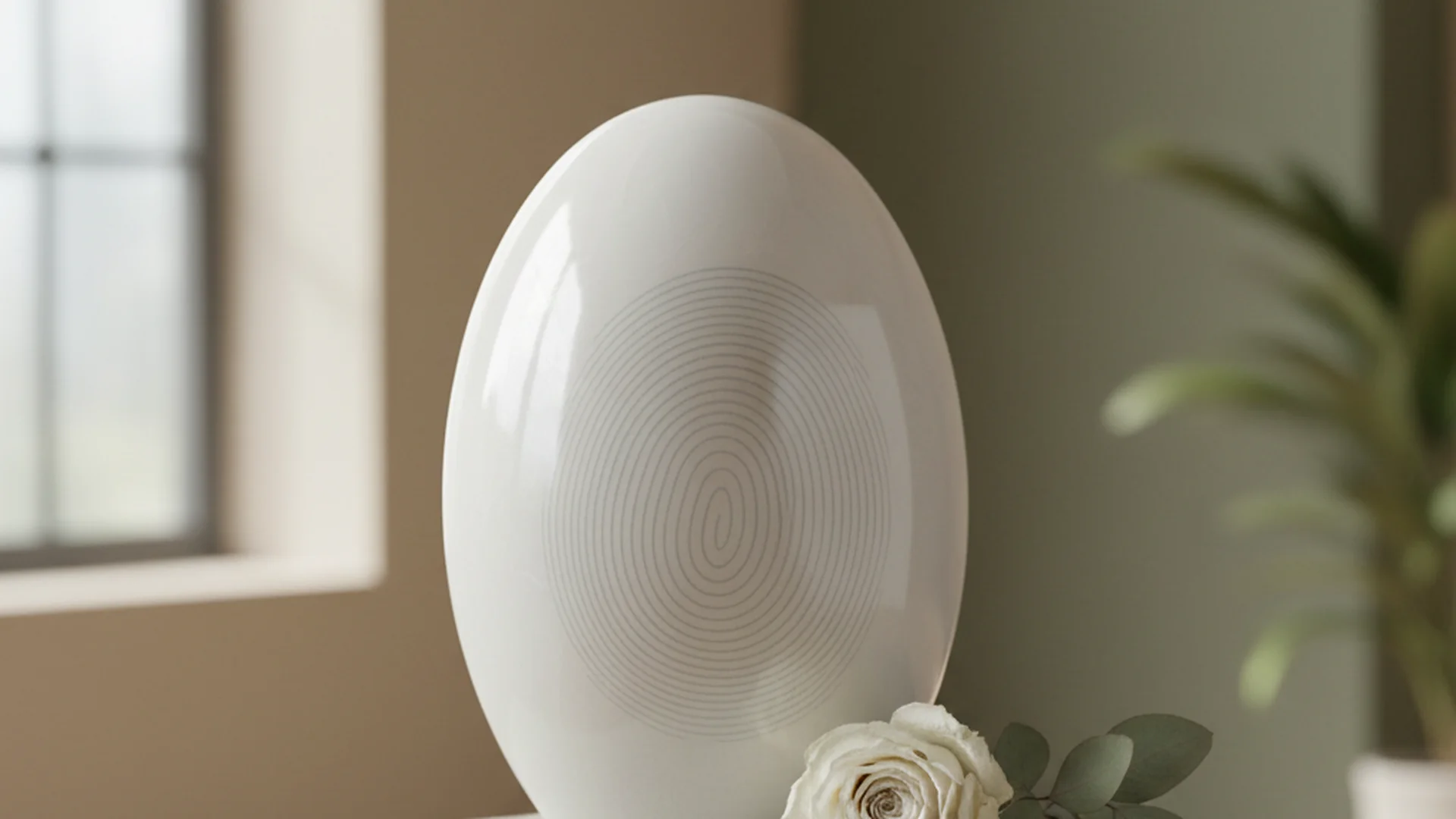
In my years as a death doula, I have found that grief often seeks a physical anchor—something tangible to hold onto when words fail. Of all the personalized tributes available today, the thumbprint urn stands out as perhaps the most intimate. It captures a person’s unique biological signature, allowing families to literally "touch" the memory of their loved one. As we move into 2025 and 2026, the technology behind these memorials has evolved from simple engravings to high-definition, tactile tributes that bridge the gap between the physical and digital worlds.
The Evolution of the Fingerprint Urn
The concept of a print memorial is not new, but the precision with which we can now execute these designs is revolutionary. Traditionally, a fingerprint urn was often a simple brass vessel with a flat, etched image. Today, we are seeing a shift toward "jewelry-forward" designs and high-tech integration.
Haptic Texturing and AI Reconstruction
One of the most significant trends for 2025 is haptic texturing. Unlike traditional engraving that creates a smooth image, new laser technology allows for deep-texture engraving. This means when you run your thumb over the fingerprint urn, you can actually feel the ridges and valleys of the print, mimicking the sensation of holding the person’s hand.
Additionally, AI digital cleanup is now solving a long-standing problem: poor print quality. If a family only has a smudged print from an old document or a 30-year-old birth certificate, AI software can now reconstruct the missing ridges to create a crisp, clear memorial.
Phygital Memorials
We are also entering the era of the "Phygital"—a blend of physical and digital. Modern thumbprint urns often feature a discreet QR code laser-etched on the base or the back of a pendant. Scanning this code leads to a "Legacy Page" where families can store videos, photo galleries, and voice recordings, ensuring the memorial is as multi-dimensional as the person it honors.
Choosing Your Material: Metal, Wood, and Beyond
When selecting a thumbprint urn, the material is just as important as the print itself. In 2025, we are seeing a significant rise in eco-friendly options.
| Material | Market Share (2025) | Best For | Durability |
|---|---|---|---|
| Metal (Brass/Steel) | 28% | Traditional display & Jewelry | High |
| Wood/Eco-Friendly | 32% | Green Burials & Natural Aesthetics | Moderate |
| Gold/Silver | 15% | Heirloom-quality Jewelry | High (requires care) |
| Ceramic/Glass | 12% | Artistic Home Display | Fragile |
Real-World Example: The Heritage Oak Urn
Consider the "Heritage Oak" series, where a thumbprint is wood-burned into a hand-carved vessel. This approach combines the warmth of natural materials with the precision of modern engraving, making it a favorite for families planning a natural memorial service.
Understanding Sizing: Keepsake vs. Full-Size
A common point of confusion for families is the capacity of a thumbprint urn. To choose correctly, you must follow the industry "gold standard" for sizing.
Most jewelry-based print memorials are considered "keepsakes." They typically hold between 0.01 and 1 cubic inch of ashes—roughly the size of a few grains of rice. These are intended to be shared among family members or kept as a personal memento, while the bulk of the ashes are placed in a full-sized urn or scattered.
How to Capture the Perfect Print at Home
If your funeral home hasn't already captured a digital scan, you can do it yourself using a few simple tools. High-quality input is essential for high-quality engraving.
- The "Ten-Attempt" Rule: Never settle for one print. Take at least 10 samples on plain white paper.
- Use Light Pressure: Pressing too hard smudges the "valleys" of the print. Think of "kissing" the paper with the finger rather than pressing into it.
- Contrast is Key: Use black ink only. Avoid pencil shading or colored inks, as laser engravers struggle to pick up the fine details without high contrast.
- Digital Submission: Instead of mailing the paper, take a high-resolution, top-down photo in natural light and email the file to the maker.
Common Mistakes to Avoid
- Waiting Too Long: This is the most critical error. Fingerprints cannot be captured after cremation or certain stages of burial. Always ask your funeral director to "capture and file" the print immediately, even if you aren't ready to buy yet.
- Aggressive Polishing: Many people treat their engraved jewelry with abrasive cleaners. Over years, this can "soften" the ridges of the print. Use only a soft microfiber cloth.
- Assuming Water-Resistance: While many modern thumbprint urns use "snap-lock" closures, they are rarely 100% waterproof. If you plan to wear the item in the shower or while swimming, use a tiny drop of jeweler’s glue on the threads to create a permanent seal.
- Ignoring Sizing Rules: Buying a keepsake when you need a full-size urn is a frequent mistake. Always check the "Cubic Inch" capacity in the product description.
Frequently Asked Questions
What if I don't have a clear fingerprint?
Are fingerprint urns waterproof?
Can a fingerprint ring or bracelet be resized?
How do I get the print to the manufacturer?
Conclusion
A thumbprint urn is more than just a container; it is a bridge between the past and the present. Whether you choose a high-fashion gold pendant that looks like a modern accessory or a biodegradable wood-burned vessel, the goal remains the same: to keep the "touch" of a loved one close. By embracing new technologies like AI reconstruction and haptic texturing, we can ensure that these memorials remain as vivid and tactile as our memories.
For more ways to personalize your tribute, consider exploring other custom items such as Fingerprint Jewelry Memorial or a Memorial Candle Options to complement your urn choice.
Explore Your Options
Browse our full collection of personalized memorial guides today.
View All GuidesWritten by Amara Okafor
Our team of experts is dedicated to providing compassionate guidance and practical resources for end-of-life planning. We're here to support you with dignity and care.