Key Takeaways
- Traditional burial remains a significant rite of passage providing a physical location for grieving.
- Costs for a full service with a vault average nearly $10,000 in 2025.
- Modern trends are integrating technology through QR-enabled headstones and virtual attendance.
Traditional burial—often referred to as conventional or standard burial—remains a deeply significant rite of passage for many families, providing a physical location for remembrance and a structured process for grieving. While the landscape of the funeral industry is shifting, the desire for a permanent, tangible place to visit a loved one continues to make traditional burial a preferred choice for millions. In this guide, we will break down the logistics, costs, and evolving trends of the standard burial process to help you make informed decisions during a difficult time.
What is Traditional Burial?
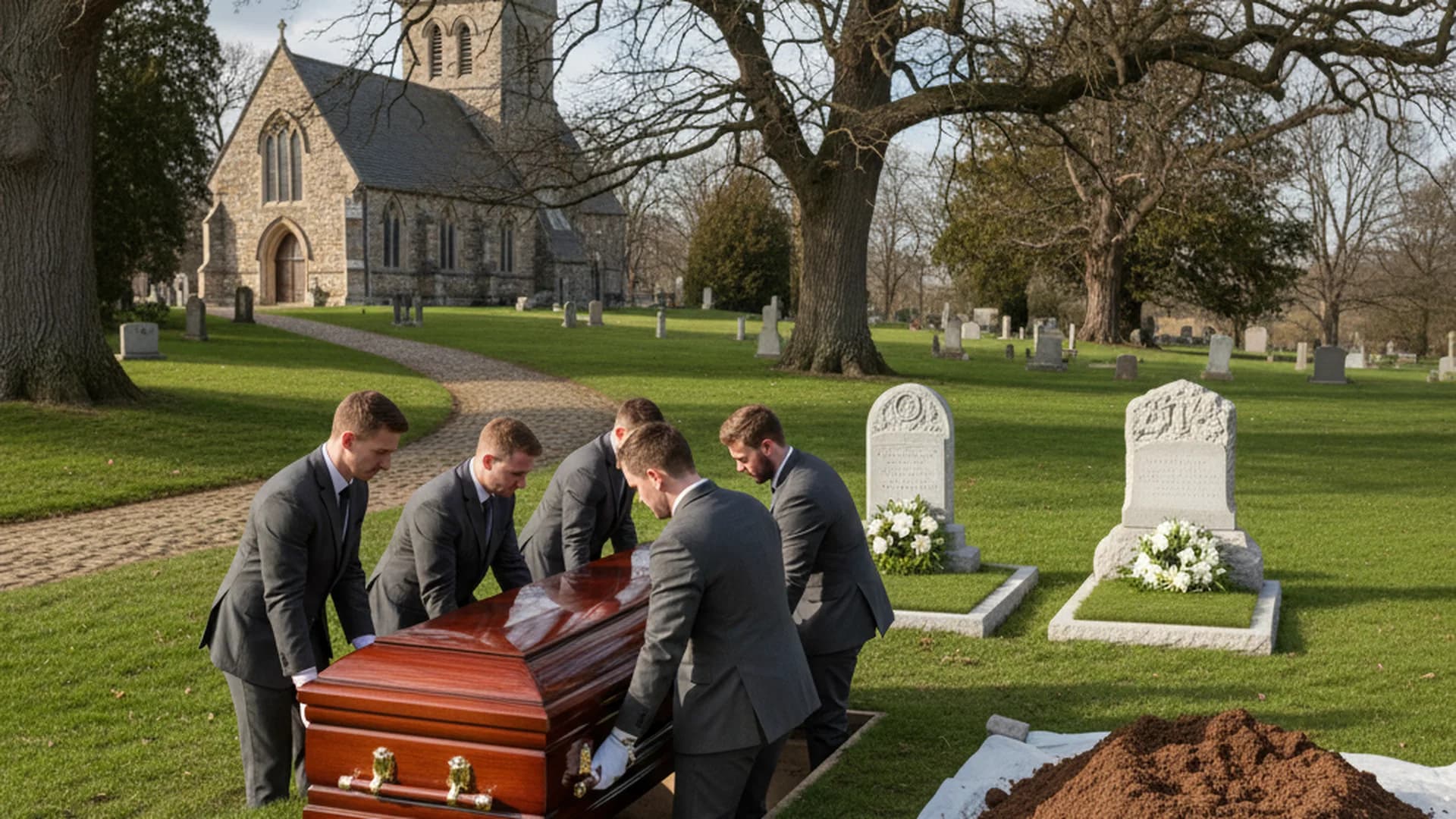
At its core, a traditional burial (or ground burial) involves the placement of a deceased person in a casket, which is then interred in a prepared grave within a cemetery. This process is typically accompanied by a series of formal events, including a visitation or "viewing," a funeral service at a house of worship or funeral home, and a final committal service at the graveside.
While often called a "standard burial," the process is anything but basic. It involves a coordinated effort between funeral directors, cemetery staff, and family members to ensure that the deceased is handled with dignity and that the legal requirements of the state or region are met.
The Components of a Conventional Burial
- Preparation of the Body: This often involves embalming, dressing, and cosmetology, especially if a public viewing is planned.
- The Casket: The primary vessel for the deceased.
- The Burial Vault: An outer enclosure that houses the casket in the ground.
- The Cemetery Plot: The specific piece of land purchased for interment.
- The Grave Marker: A headstone or monument used to identify the site.
The Financial Reality: Costs in 2025-2026
One of the most critical aspects of planning a standard burial is understanding the financial commitment. In 2025, the median cost for a traditional funeral with burial is $8,300. However, this figure rarely tells the whole story. When you include a burial vault—which most cemeteries require—the median cost rises to approximately $9,995.
Cost Breakdown Table
| Expense Item | Estimated 2025 Cost (Median) |
|---|---|
| Funeral Home Service Fee | $2,500 - $3,500 |
| Embalming & Body Prep | $800 - $1,200 |
| Metal or Wood Casket | $2,000 - $5,000+ |
| Burial Vault | $1,500 - $2,500 |
| Cemetery Plot | $1,000 - $4,000 |
| Opening and Closing Fees | $1,000 - $2,000 |
| Headstone/Marker | $1,000 - $3,000 |
For a more detailed look at these expenses, you may want to review our Average Funeral Cost Breakdown.
Key Logistics and Procedures
Understanding how a ground burial works can demystify the process during a time of high stress.
Embalming and Preparation
A common question is: Is embalming required by law? Generally, no. Embalming is typically only required if there is a public viewing, a long delay before burial (usually more than 24-48 hours), or if the body is being transported across state lines or international borders. Embalming is a chemical process intended for temporary preservation and to enhance the appearance of the deceased for a viewing.
Casket vs. Coffin
While these terms are used interchangeably, they refer to different designs:
- Casket: Rectangular in shape, usually made of high-quality wood or metal, and featuring a split lid (half-couch) for viewing the upper body.
- Coffin: Hexagonal in shape (tapered at the shoulders and feet) and more common in Europe and older historical contexts.
To understand how materials affect the price of these vessels, see our guide on Casket Prices Explained.
The Role of the Burial Vault
While state laws rarely mandate the use of a vault, most cemeteries do. A burial vault is a reinforced outer container that protects the casket from the weight of the earth and heavy cemetery maintenance equipment. Most importantly for the cemetery, it prevents the ground from settling, keeping the graveyard lawn level and safe for visitors.
Recent Trends in Traditional Burial (2025–2026)
The funeral industry is undergoing a digital and environmental transformation. Even the most "traditional" families are adopting new technologies and hybrid approaches.
1. High-Tech Headstones
A significant trend in 2025 involves embedding QR codes or NFC-enabled microchips into weather-proof grave markers. When a visitor scans the code with their smartphone, they are taken to a digital memorial page. This page can host photos, videos, a full biography, and even a "digital guestbook" where visitors can leave messages. This bridges the gap between the physical grave and the digital legacy of the deceased.
2. Virtual Integration and Livestreaming
Livestreaming is no longer an "emergency" measure. In 2025, it has become a standard service offering. Data shows that 45% of Americans are now comfortable attending a funeral virtually. This allows remote family members or those with mobility issues to participate in the ceremony in real-time.
3. Hybrid "Green-Traditional" Burials
Many conventional cemeteries are opening "natural sections." These allow families to combine traditional elements—like a graveside service in a known cemetery—with eco-friendly choices, such as biodegradable caskets and the omission of embalming fluids. This "middle ground" is becoming increasingly popular for those who want to be buried near family members but wish to reduce their environmental footprint.
4. Celebrations of Life
There is a marked shift away from somber, strictly religious services. Families are increasingly opting for "Celebrations of Life." These events might take place at the funeral home but feature personalized themes, upbeat music, and storytelling, focusing on the joy of the life lived rather than the sadness of the passing.
Best Practices and Expert Recommendations
As a Death Doula, I often see families overwhelmed by the number of choices required in a short window of time. Here are the top recommendations for navigating a traditional burial.
Shop Around and Compare
Funeral homes are legally required by the "Funeral Rule" to provide you with a General Price List (GPL). Do not feel obligated to use the first funeral home you call. Experts recommend comparing at least three different homes to avoid "emotional overspending." The price for the exact same casket can vary by thousands of dollars between providers.
The Importance of Pre-Planning
Documenting your wishes in a "pre-need" contract can lock in current prices. This is a powerful hedge against the 3–4% annual inflation seen in the funeral industry. If you don't want to prepay, at least ensure your family knows your preferences for the type of casket, the cemetery, and the specific plot.
Inspect the Cemetery
Before purchasing a plot, visit the grounds in person. Look for evidence of "perpetual care." This is a trust fund (often mandated by state law) where a portion of your plot price is invested to ensure the cemetery is maintained—grass cut, stones upright—long after the current owners are gone.
Common Mistakes to Avoid
- Thinking a Will is a Funeral Plan: This is the most common mistake. Wills are often not read or even located until weeks after the death. By then, the burial has already occurred. Keep your funeral wishes in a separate, accessible document and share it with your next of kin.
- Assuming Embalming is Permanent: Embalming is a temporary measure for viewing. It does not stop natural decomposition indefinitely, regardless of what a salesperson might imply.
- Falling for "Protective" Casket Myths: Some caskets are sold as "gasketed" or "sealed" to keep out air and water. While they do keep external elements out, they can actually accelerate certain types of decomposition by trapping moisture and gases inside the casket. They are not a "preservation" miracle.
- Overlooking "Direct Burial": If cost is the primary concern but you still want a ground burial, ask about "direct burial." This involves interment shortly after death without a viewing or formal ceremony. It typically costs between $3,000 and $6,000, saving thousands on preparation and facility fees.
Essential Terms to Know
To navigate the paperwork of a conventional burial, you should be familiar with these industry terms:
- Interment: The formal act of placing the casket into the ground or a tomb.
- Committal Service: A brief ceremony held at the graveside immediately before the burial. It often serves as the final "goodbye."
- Opening and Closing Fees: This is the fee the cemetery charges to physically dig the grave and fill it back in. It is almost always separate from the cost of the land itself.
- Plot: The specific piece of real estate in the cemetery designated for the grave.
- Perpetual Care: A fund set aside for the long-term maintenance of the cemetery grounds.
| Term | Simple Definition |
|---|---|
| Grave Liner | A basic concrete box that supports the ground (less expensive than a vault). |
| Sexton | The cemetery official responsible for the maintenance and records of the grounds. |
| Plot Deed | The legal document proving your right to be buried in a specific cemetery space. |
For a broader look at all available choices, including above-ground options, see our Complete Guide to Burial Options.
Frequently Asked Questions
Is a burial vault mandatory?
Can I buy a casket online?
How long does a traditional burial take?
What is the difference between a plot and a deed?
Can two people be buried in one plot?
Conclusion
A traditional burial is more than just a logistical process; it is a final act of stewardship for a loved one's physical remains. While the costs can be significant and the choices overwhelming, understanding the components—from caskets and vaults to the new digital trends of 2025—can empower you to plan a service that is both respectful and affordable.
By pre-planning, shopping around, and understanding the legalities of embalming and vaults, you can ensure that the focus remains where it should be: on honoring the memory of the person you lost. Whether you choose a high-tech QR-enabled headstone or a simple direct burial, the goal is to create a space of peace and remembrance for generations to come.
Need More Guidance?
Explore our comprehensive library of funeral and burial resources to plan with confidence.
View Burial GuidesWritten by Amara Okafor
Our team of experts is dedicated to providing compassionate guidance and practical resources for end-of-life planning. We're here to support you with dignity and care.