Key Takeaways
- Ensure the case fits a standard 5' x 9.5' burial flag, not a smaller 3' x 5' flag.
- Prioritize UV-resistant glass and solid hardwoods to prevent fading and structural damage.
- Modern trends for 2025–2026 favor integrated LED lighting and combination shadow boxes.
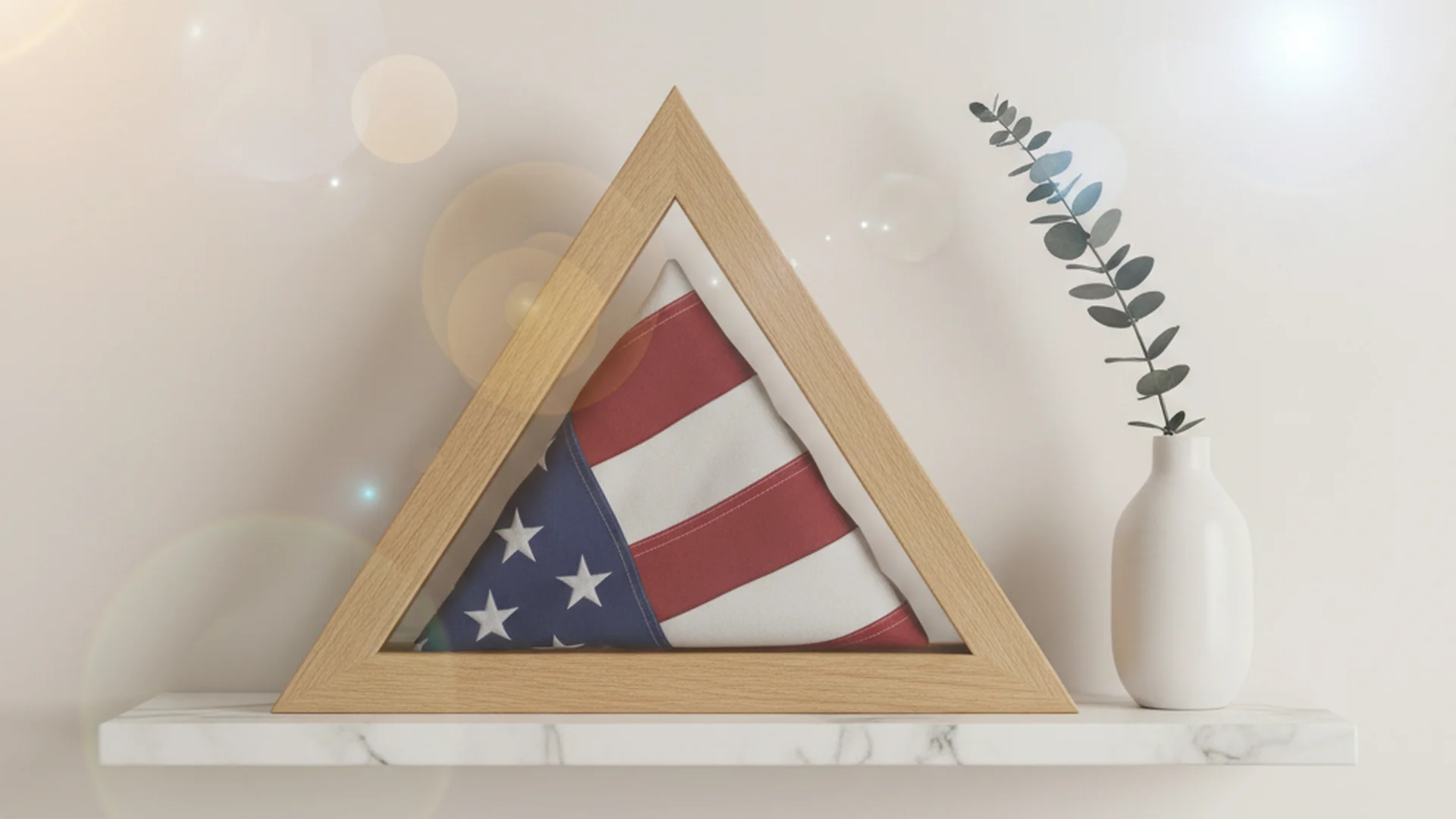
Receiving a burial flag is one of the most poignant moments for a military family. It represents a lifetime of service, sacrifice, and duty. However, once the ceremony concludes, many families find themselves wondering how to preserve this sacred heirloom. Selecting the right veteran flag display case is more than a simple purchase; it is a commitment to protecting a legacy. In this guide, we will explore the essential requirements for a military flag case, modern trends for 2025, and expert tips to ensure your tribute lasts for generations.
Understanding the Standard Burial Flag
Before you can choose a display case, you must understand the dimensions of the flag itself. The Department of Veterans Affairs (VA) issues a specific size for burial purposes. These flags are significantly larger than the standard flags you might see flying on a residential porch.
A standard U.S. burial flag measures 5 feet by 9.5 feet. When properly folded into the traditional triangular shape, the flag becomes quite thick and heavy. This is because burial flags are made of 100% cotton, a tradition that provides a matte, dignified finish but also adds bulk.
The Difference Between Burial and Presentation Flags
A common mistake families make is purchasing a case designed for a "Presentation Flag" or a "Capitol Flag." These flags typically measure 3' x 5'. While a 3' x 5' case looks similar in photos, it is physically impossible to fit a folded burial flag into one.
| Flag Type | Dimensions | Common Use | Case Needed |
|---|---|---|---|
| Burial/Casket Flag | 5' x 9.5' | Funerals/Memorials | Large/Burial Case |
| Presentation Flag | 3' x 5' | Retirement/Gifts | Small/Standard Case |
| Capitol Flag | 3' x 5' | Flown over the Capitol | Small/Standard Case |
Selecting the Right Materials
When choosing a military flag case, the materials used will determine how well the flag is preserved over the next fifty years. Cheap materials might look acceptable on a shelf for a few months, but they often fail to protect the fabric from environmental hazards.
Solid Hardwoods vs. Veneers
Experts strongly recommend opting for solid hardwoods such as Cherry, Oak, Walnut, or Mahogany. Solid wood provides the structural integrity needed to support the 7-to-10-pound weight of a folded cotton flag.
Avoid "wood-veneer" or MDF (Medium Density Fiberboard). These materials are prone to warping if they encounter humidity, and the adhesives used in MDF can sometimes off-gas chemicals that may yellow the white stars of the flag over time.
Glass vs. Acrylic
The choice between glass and acrylic often comes down to where you intend to display the case:
- Glass: Offers a classic, high-end look and is highly scratch-resistant. It is the preferred choice for tabletop displays.
- Acrylic: Lighter and shatterproof. This is often the better choice if you plan to mount the case high on a wall or if you live in an area prone to seismic activity.
Preservation Best Practices
A burial flag display is a long-term preservation project. Because the VA only issues one flag per veteran—and will not replace it if it is damaged or lost—taking steps to protect the fabric is vital.
Creating an Air Gap
One common misconception is that the flag should be pressed tightly against the glass. In reality, it is better to have a slight air gap. If the fabric touches the glass directly, any moisture or condensation that forms on the surface can transfer to the cotton, leading to "foxing" (brown spots) or mildew.
Ensuring a Snug Fit
While you want an air gap at the front, the flag should not sag. If your case is slightly too deep, the flag may slump toward the bottom over time. To fix this, use acid-free foam board or acid-free tissue paper behind the flag to gently push it forward so the blue field remains crisp and visible.
Modern Trends for 2025–2026
As we move into 2025, the way families choose to display military honors is evolving. We are seeing a move away from simple triangular boxes toward more comprehensive memorial displays.
1. Combination Shadow Boxes
Many families now prefer "All-in-One" displays. These cases feature the triangular flag compartment at the top or side, paired with a rectangular shadow box. This allows you to display the flag alongside the veteran’s medals, rank insignia, and photographs. This is particularly helpful when explaining a loved one's service to younger generations. You can learn more about how these honors are presented in our guide on the 21 Gun Salute Explained: What It Is, How It Works, and Key Terms.
2. Integrated LED Lighting
A major trend for 2026 is the inclusion of recessed, battery-operated LED lighting. These lights are designed to illuminate the flag from within without generating heat or harmful UV rays. This creates a stunning focal point in a home library or office, especially at night.
3. Laser-Engraved Personalization
Traditional brass nameplates are being replaced by direct laser engraving on the glass or wood. This allows for more intricate designs, such as the official branch seal (Army, Navy, Air Force, Marines, Coast Guard, or Space Force) to be etched directly onto the display.
Common Mistakes to Avoid
Even with the best intentions, it is easy to make a mistake when setting up a veteran flag display case. Here are the most frequent errors encountered by funeral directors:
- Using the Flag Outdoors: Burial flags are made of heavy cotton. They are intended for ceremonial draping over a casket or for indoor display. If flown outdoors, they will rot and fade almost immediately.
- Incorrect Folding: The flag must be folded so that only the blue field and white stars are visible. If you see any red or white stripes showing through the front of your case, the flag needs to be refolded.
- Poor Wall Mounting: A solid wood case with a burial flag is heavy. Many families try to hang them using standard picture hooks, only for the case to fall and shatter. Always use heavy-duty wall anchors or mount the case directly into a wall stud.
- Buying Based on Price Alone: While budget is a factor, "bargain" cases are often made of plastic or thin veneers that will not stand the test of time. Considering this is a one-time purchase for a lifetime of memory, investing in quality is recommended.
Frequently Asked Questions
What size flag case do I need for a standard burial flag?
Can I get a replacement flag if mine is damaged?
How do I get a burial flag if the funeral home didn't provide one?
Should I choose a case with a pedestal?
Is it okay to display medals inside the flag case?
Conclusion
A veteran flag display case is more than just a piece of furniture; it is a vessel for history. By choosing a case made of solid hardwoods, ensuring UV protection, and selecting the correct size for a burial flag, you ensure that the honors earned by your loved one remain pristine for years to come. Whether you opt for a traditional cherry wood box or a modern 2025 design with integrated lighting, the most important factor is the respect and care you show in preserving this symbol of freedom.
Honor Their Legacy
Explore our comprehensive guides on veteran memorials and pre-planning today.
Read MoreWritten by Julian Rivera
Our team of experts is dedicated to providing compassionate guidance and practical resources for end-of-life planning. We're here to support you with dignity and care.