Key Takeaways
- Understand the 1-cubic-inch-per-pound rule for choosing the right urn size.
- Explore 2025 trends like 'Treebutes' and QR-coded memorial jewelry.
- Learn the critical difference between private and individual cremation services.
Losing a beloved companion is one of life’s most difficult transitions. As we move further into 2025, the way we handle the final remains of our animal friends has shifted from a somber necessity to a deeply personalized celebration of life. Knowing what to do with pet ashes is a journey that begins with grief but often ends in a beautiful, lasting tribute. Whether you are looking for a traditional mantle display or a high-tech digital legacy, this guide explores every option and timeline available to modern pet parents.
Understanding Pet Cremains: The Basics
Before deciding on a memorial, it is helpful to understand what you are receiving. Pet cremains (ashes) are not like the soft, fluffy ash found in a fireplace. Because the cremation process involves extreme heat (between 1,500°F and 2,000°F), all organic matter is consumed, leaving behind only bone fragments. These fragments are then processed into a uniform consistency.
The result is a pale grey or off-white powder with a texture similar to coarse sand. It is important to note that these remains are 100% sterile and pose no environmental or health risks to your home or garden.
How Much Ash Will I Receive?
A common concern for pet owners is whether their chosen urn will be large enough. The general rule of thumb for pet aftercare is that cremains weigh approximately 3.5% of the pet’s original body weight.
| Pet Weight | Approximate Ash Volume | Recommended Urn Size |
|---|---|---|
| 1–10 lbs | 10 cubic inches | Small / Keepsake |
| 11–30 lbs | 30 cubic inches | Medium |
| 31–70 lbs | 70 cubic inches | Large |
| 71–100+ lbs | 100+ cubic inches | Extra Large |
The Timeline: When to Expect Your Pet Home
The waiting period can be one of the most anxious times for a grieving owner. While the actual cremation process only takes between 30 minutes and 2 hours (depending on the size of the animal), you typically won't receive the ashes immediately.
The standard industry timeline is 1 to 2 weeks. This window accounts for:
- Transport: Moving the pet from the veterinary clinic to the crematorium.
- Processing: Cooling the remains and processing them into a fine powder.
- Certification: Ensuring the chain-of-custody paperwork and "Certificate of Cremation" are finalized.
- Return: Shipping or delivering the ashes back to the clinic or your home.
Traditional Pet Ash Options
For many, the comfort of having their pet physically present in the home is the primary goal.
1. Decorative Urns
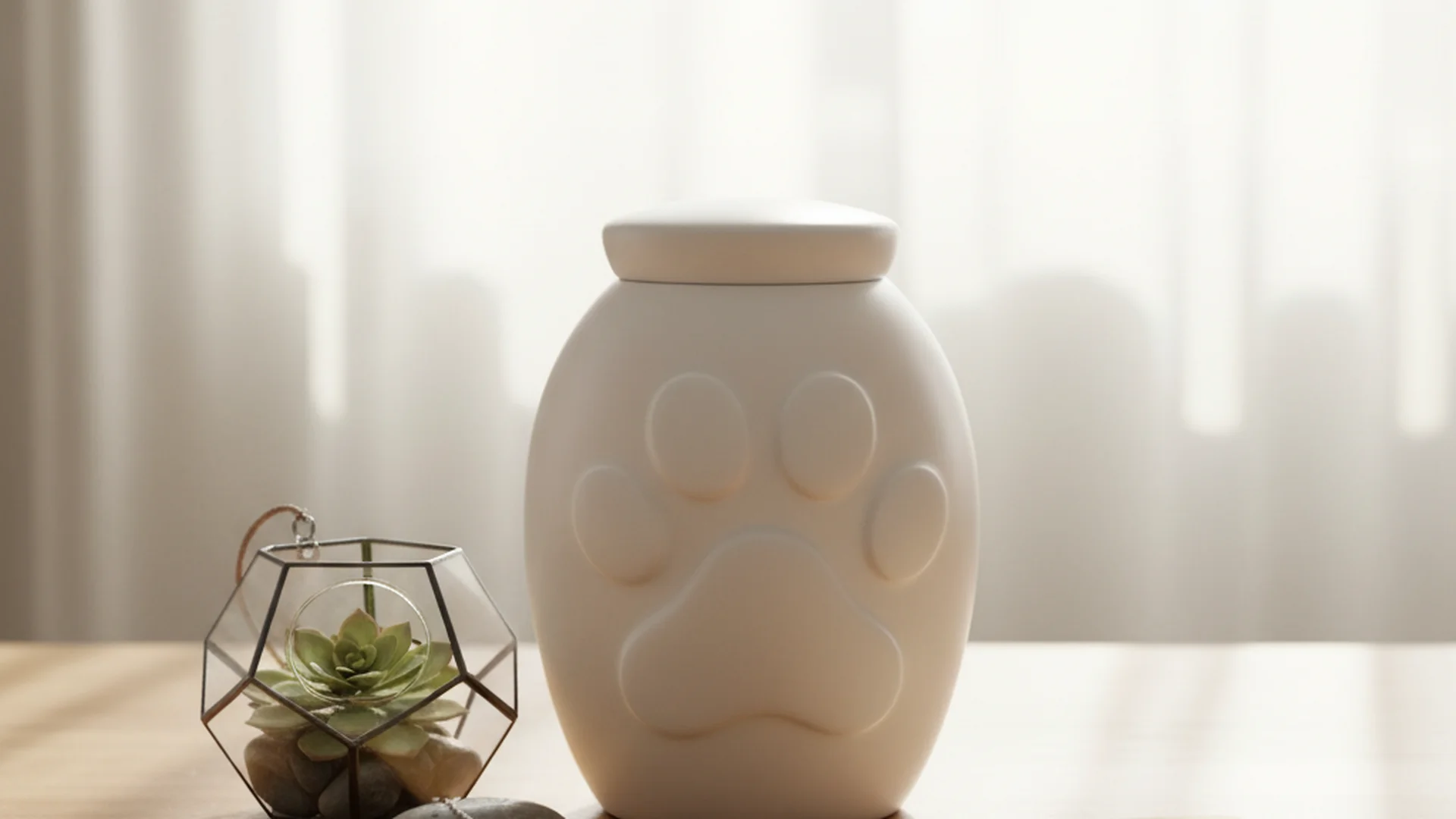
Gone are the days of simple wooden boxes. In 2025, urns are designed to look like high-end home decor. Options include hand-blown glass, biodegradable paper for water burials, and even photo-frame urns that allow you to keep a favorite portrait front and center.
2. The "Welcome Home" Ritual
Bereavement experts suggest that the day you bring the ashes home should be treated as a "Welcome Home" ceremony.
- Example: One family in Seattle chose to place their Golden Retriever's urn on his favorite sunlit rug for the first three days before moving it to a permanent shelf. This "bridging" period helped their children process the transition from a physical pet to a memorialized one.
3. Safe Ash Transfer
If you purchase a custom urn online, you may need to transfer the ashes from the temporary container provided by the crematorium.
Modern Trends for 2025 and 2026
As pet humanization grows, so does the technology used to remember them. We are seeing a move toward "living" and "interactive" memorials.
Living Memorials (The Treebute)
A "living urn" is a biodegradable container that comes with a specific growth medium. You mix a portion of the pet’s ashes with soil designed to neutralize the high pH of cremains. You then plant a tree or shrub directly into the urn. This allows the pet's energy to literally give life to something new.
Ashes-Infused Glass and Diamonds
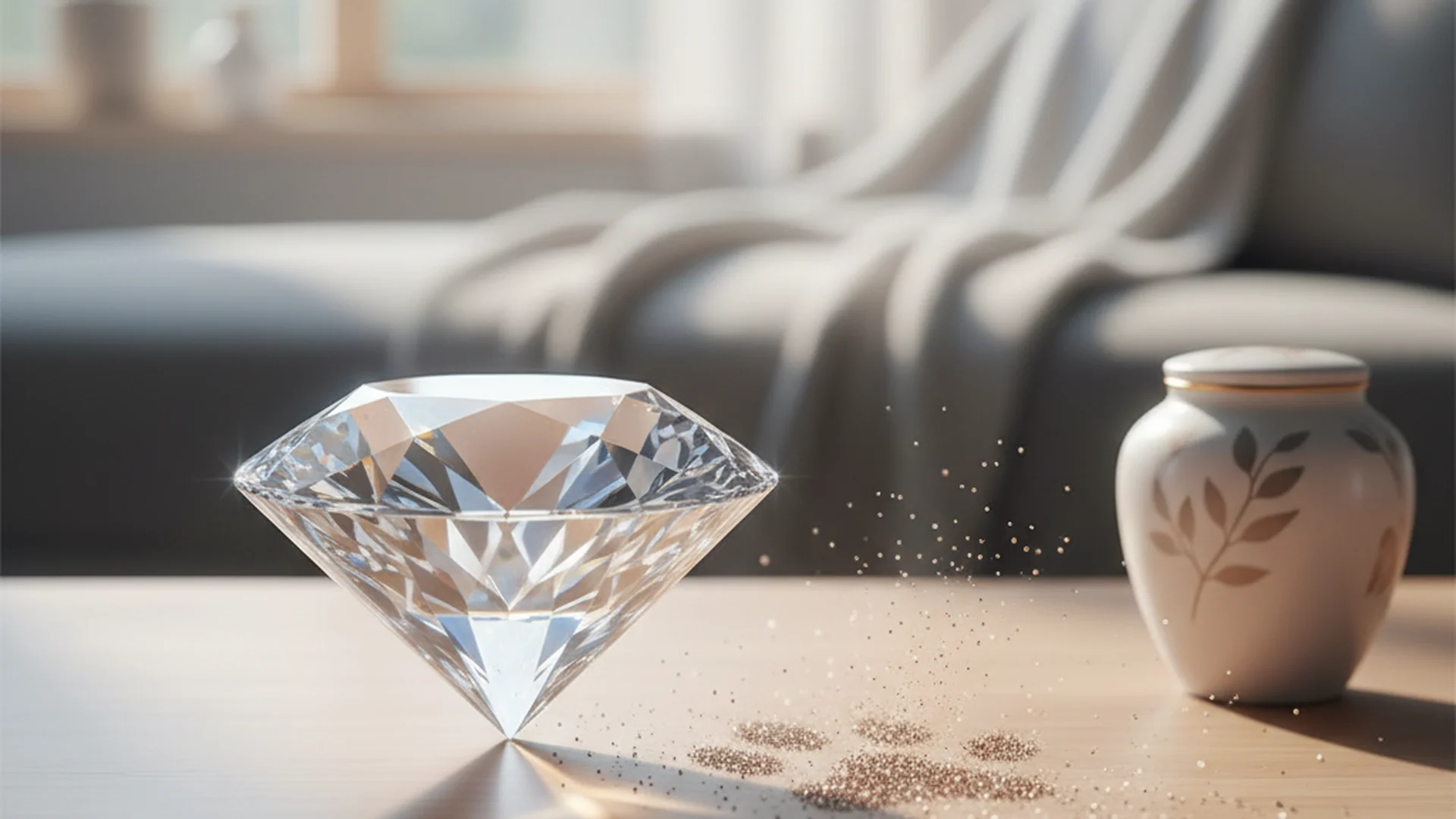
For those who want a wearable tribute, lab-grown gemstones are a leading trend for 2026. By extracting the carbon from the ashes, specialists can create a "Memorial Diamond" that is chemically identical to a natural diamond. Alternatively, molten glass art involves swirling a small amount of ash into hand-blown glass orbs or sculptures.
Memorial Diamonds from Pet Ashes are becoming a popular way to keep a piece of a pet close at hand forever.
High-Tech Personalization
New for 2025 are memorial pendants and urns featuring laser-etched QR codes. When scanned with a smartphone, these codes lead to a digital "legacy page" where you can host a gallery of photos, videos of your pet playing, and written stories. This ensures that their personality—not just their remains—is preserved for future generations.
Scattering Pet Ashes: Laws and Best Practices
If you decide that "returning your pet to nature" is the best path, you must be aware of the legal and practical nuances.
Where Can You Scatter?
- Private Property: You can scatter ashes on your own land or any private land where you have the owner's written permission.
- National Parks: In the United States, most National Parks allow scattering, but they require a Special Use Permit. You must also stay away from developed areas like trails and visitor centers.
- Water Burials: Be aware that US EPA rules for "Burial at Sea" technically apply to human remains only. Pets are often excluded from these federal permits, so check local maritime laws before heading out on a boat.
Eco-Friendly Alternatives: Aquamation
If traditional flame cremation doesn't feel right, 2026 is seeing a massive surge in Aquamation (alkaline hydrolysis). This process uses a combination of water, heat, and alkalinity to accelerate natural decomposition.
- Environmental Impact: It uses 90% less energy than flame cremation and releases no greenhouse gases.
- The Result: You receive approximately 20% more "ash" back, and the remains are whiter and finer than those from flame cremation.
To learn more about how this fits into the broader landscape of pet aftercare, see our Pet Cremation Options (Options and Timeline).
Common Mistakes to Avoid
- Confusing "Individual" vs. "Private" Cremation: This is the most frequent error. An Individual cremation often involves multiple pets in the same chamber, separated by partitions. If you want to ensure your pet is the only one in the machine, you must request a Private Cremation.
- Waiting Too Long to Decide: While you don't want to rush, many crematoriums will only hold ashes for up to one year. After that, they may be scattered in a communal garden.
- Neglecting Labels: Even if you have a beautiful urn, place a small ID tag inside or a label on the bottom. If you move house or if the urn is passed down to a relative, this prevents the ashes from being lost or misidentified decades later.
Frequently Asked Questions
What do pet ashes actually look like?
Can I keep pet ashes at home indefinitely?
Is it possible to get the wrong ashes back?
Can I have a funeral service if I choose cremation?
How much does it cost to turn ashes into jewelry?
Conclusion
Deciding what to do with pet ashes is the final act of stewardship for a loyal companion. Whether you choose a high-tech QR-coded pendant, a living "Treebute" in your garden, or a traditional urn on the mantle, the goal is to create a space for reflection and memory. Remember that grief has no expiration date; if you aren't ready to choose a final resting place today, it is perfectly acceptable to keep the ashes in their temporary container until the right path becomes clear.
Need help with the next steps?
Explore our detailed guides on memorialization and estate logistics.
View All GuidesWritten by David Montgomery
Our team of experts is dedicated to providing compassionate guidance and practical resources for end-of-life planning. We're here to support you with dignity and care.