Key Takeaways
- Most cemeteries require at least a name and dates for identification.
- Wait 6 to 12 months after burial before installing a permanent headstone.
- Granite is the gold standard for durability in 2025-2026.
Choosing a final memorial for a loved one is one of the most significant tasks a family will undertake. It is a decision that bridges the gap between the immediate sting of loss and the long-term preservation of a legacy. When deciding what to put on a headstone, you are essentially writing the final chapter of a person’s story in stone.
As a funeral director, I often see families feel rushed to complete this task. However, a headstone is a permanent monument intended to last for centuries. Whether you are looking for a traditional headstone inscription or exploring modern digital integrations, this guide will walk you through the costs, materials, and the critical timeline for creating a lasting tribute.
The Core Essentials: What Information is Required?
While the creative possibilities for a gravestone epitaph are endless, there are several practical elements that most families include. From a legal and administrative standpoint, cemeteries usually have "must-have" data points to ensure the grave remains identifiable for future generations.
The Identification Basics
At a minimum, nearly every headstone includes:
- Full Legal Name: Including middle names or maiden names to help genealogists and descendants.
- Dates of Birth and Death: Usually formatted as "Month Day, Year" or simply the years for a more minimalist look.
- Family Role: Words like "Beloved Mother," "Devoted Father," or "Cherished Son."
Symbolic Graphics and Icons
In 2025, laser etching has made it easier to include high-detail graphics. Common choices include religious symbols (crosses, Stars of David), military emblems (service branches or medals), or personal passions (a musical note, a fishing lure, or a specific flower).
Understanding the Costs and Materials (2025-2026)
The price of a headstone is largely determined by the material and the complexity of the design. With funeral costs rising by approximately 6% annually, understanding your budget early is essential.
| Headstone Type | Average Cost (2025) | Best For |
|---|---|---|
| Flat Grave Marker | $600 - $1,000 | Budget-friendly / Modern minimalist cemeteries |
| Single Upright | $1,000 - $3,000 | Traditional memorials with ample inscription space |
| Companion (Double) | $2,000 - $5,000 | Couples or family plots |
| Premium Custom | $10,000+ | Unique sculptures or rare materials like Blue Pearl Granite |
Why Material Choice Matters
When deciding what to put on a headstone, the material dictates how long that information remains legible.
- Granite: The industry standard. It is incredibly hard and resists the "acid rain" erosion that plagues older cemeteries.
- Marble: Beautiful and classic, but softer. Over 50–100 years, the inscription can become blurry as the stone wears away.
- Bronze: Often used for flat markers. It develops a patina over time and is highly durable.
For a deeper look at which material suits your climate, see our guide on Headstone Materials Compared.
The Design Process: Expert Best Practices
Designing a headstone is a collaborative effort, but it can quickly become overwhelming if too many voices are involved.
The "Family Leader" Rule
In my experience, the most successful designs are managed by one family spokesperson. When a headstone is designed by a committee, the inscription often becomes cluttered as everyone tries to add "one more line." Appoint one person to gather ideas, but give them the final authority to approve the proof.
Legibility and Font Choices
While a flowing script font might look elegant on a computer screen, it can be difficult to read once carved into stone.
- Classic Serif: Fonts like Roman are the gold standard for legibility.
- Modern Sans-Serif: Helvetica or similar fonts offer a clean, contemporary look.
- Avoid Over-Ornateness: Thin lines in script fonts are the first to chip or fade as the stone ages.
Real-World Example: The Minimalist Approach
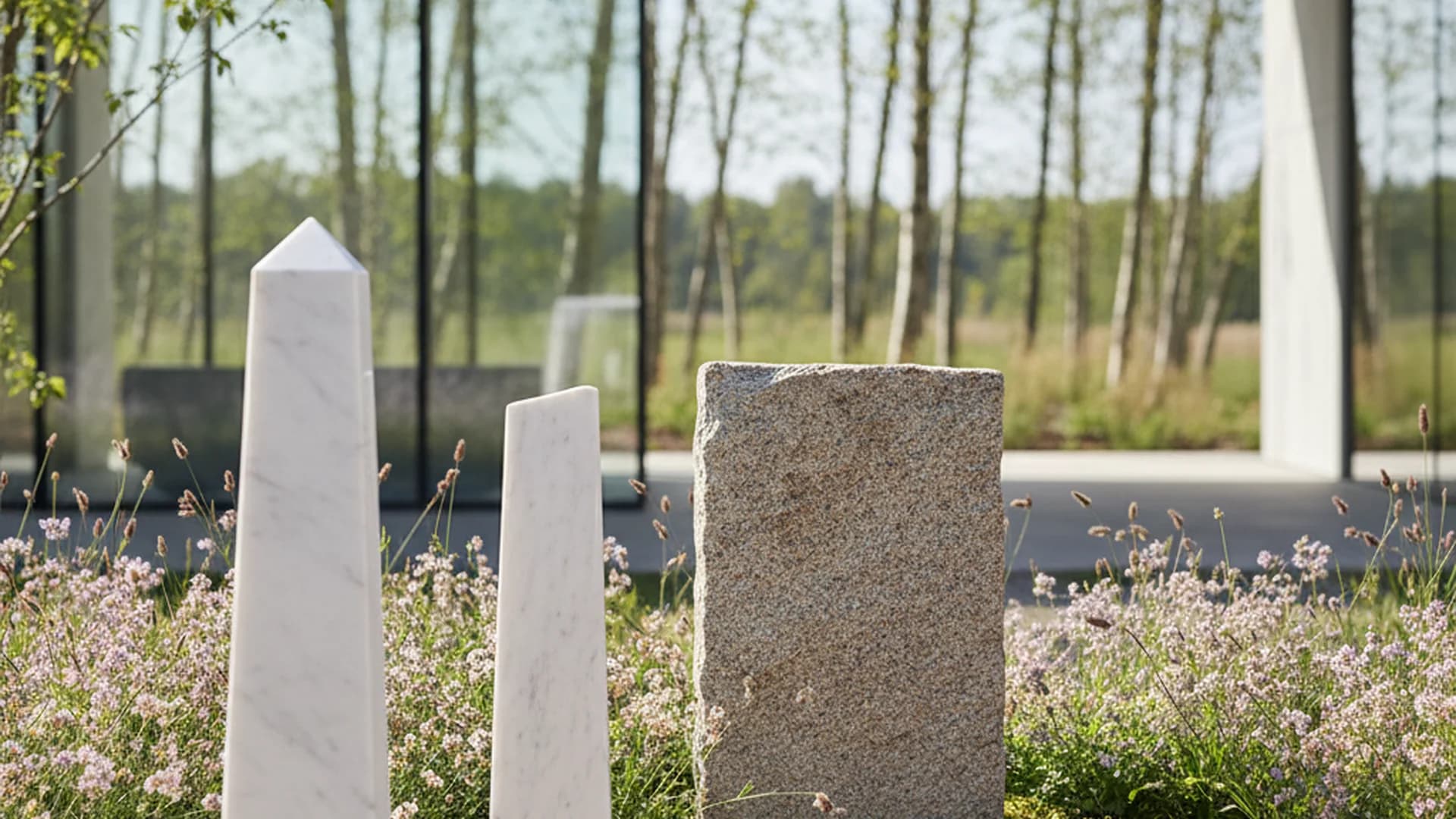
A family recently chose a large, unpolished granite boulder as a marker. Instead of a long poem, they etched only the name, dates, and a small QR code. This preserved the natural beauty of the stone while providing a wealth of information digitally.
Navigating Cemetery Regulations
Before you finalize your order with a third-party vendor, you must consult the cemetery’s rulebook. Every cemetery has specific Headstone Regulations that govern what can be placed on their grounds.
Common restrictions include:
- Material Limits: Some sections may allow only bronze markers on granite bases.
- Size Limits: Height and width restrictions are common to ensure the rows of markers look uniform.
- Tone of Epitaphs: Some religious cemeteries may require all inscriptions to be "of a sacred nature" and may prohibit humorous or secular quotes.
The Modern Era: QR Codes and Digital Memorials
We are entering a new phase of memorialization. In 2025 and 2026, one of the fastest-growing trends is the integration of digital technology.
QR Codes
A small, durable QR code can be etched directly into the corner of the granite. When a visitor scans it with their smartphone, they are taken to a memorial website. This allows you to include:
- Photo galleries and videos.
- A full biography that wouldn't fit on the stone.
- A digital guestbook for visitors to leave messages.
Laser Etching
Traditional sandblasting is great for deep text, but laser etching allows for ultra-high-definition portraits. If you want a photo of your loved one on the stone, laser etching on black granite provides a level of detail that was impossible a decade ago.
The Crucial Timeline: Why You Shouldn't Rush
One of the most frequent questions I receive is: "When can we install the headstone?" The answer is almost always: Wait.
0–3 Months: The Immediate Phase
This time should be reserved for grieving and handling the estate. Most cemeteries provide a temporary plastic or metal marker. Focus on gathering Headstone Inscription Ideas during this period rather than making a final purchase.
3–6 Months: The Design Phase
By this point, the initial shock has faded, and you can think more clearly about the legacy you want to leave. This is the time to consult with a monument builder and get your designs approved by the cemetery.
6–12 Months: The Settling Phase
This is the most critical step. When a grave is dug, the soil is loosened. If you place a heavy granite stone (which can weigh 200–500 lbs) on fresh soil, it will inevitably tilt or sink. You must wait for the ground to settle through several rain cycles or a change of seasons.
1 Year: The Unveiling
Many cultures hold an "unveiling" ceremony around the first anniversary of the death. This provides a sense of closure and ensures the stone is placed on firm, compacted ground.
For more details on this process, see our article: How Long After Burial for Headstone?.
Common Mistakes to Avoid
- Installing Too Early: As mentioned, a sinking headstone is a logistical nightmare to reset.
- Overcrowding the Stone: A headstone is a monument, not a biography. If you have too much text, the font size must be reduced, making it unreadable from a distance.
- Using Improper Humor: A joke that is funny today may feel inappropriate or confusing to a great-grandchild visiting the grave 50 years from now.
- Neglecting Maintenance: Bronze requires occasional polishing, and granite may need cleaning to remove lichen or hard water stains.
Frequently Asked Questions
Can I buy a headstone from someone other than the cemetery?
How many words can I fit on a standard headstone?
What is the most durable type of headstone?
Can I add a name to an existing headstone later?
Conclusion
Deciding what to put on a headstone is a deeply personal journey. By balancing the practical requirements of the cemetery with the creative desire to honor a unique life, you can create a tribute that stands the test of time. Remember to prioritize legibility, respect the necessary 12-month timeline for soil settling, and don't be afraid to embrace modern touches like QR codes to tell a fuller story.
If you are just beginning this process, I recommend looking at our Types of Headstones guide to see which physical style best fits your vision.
Need More Guidance?
Explore our complete library of memorial resources and checklists.
View Memorial GuideWritten by Julian Rivera
Our team of experts is dedicated to providing compassionate guidance and practical resources for end-of-life planning. We're here to support you with dignity and care.