Key Takeaways
- Choose scannable materials like cardboard or bamboo for air travel compliance.
- Follow the 1 pound to 1 cubic inch rule for sizing your scattering tube.
- Always perform a 'wind check' before opening the container to avoid blowback.
As we move through 2025, the way we honor our loved ones is shifting toward more personal, natural, and mobile ceremonies. Traditional heavy urns are increasingly being replaced by scattering tubes, designed specifically for the act of letting go. Whether you are planning a ceremony on a mountain peak, at sea, or in a beloved family garden, the right scattering container ensures the process is handled with dignity and grace.
Current data shows that the U.S. cremation rate is projected to reach 63.4% in 2025, with over a third of those families choosing to scatter remains in sentimental locations. This shift has led to an evolution in design, moving from simple cardboard boxes to sophisticated, eco-conscious tools that simplify the logistics of a final farewell.
Understanding Scattering Tubes and Containers
A scattering tube is a specialized urn designed for the easy, controlled release of cremated remains. Unlike traditional urns, which are often sealed permanently and intended for display or burial, a scatter tube features a removable lid or a perforated tab. This design allows for a "pouring" or "sifting" motion rather than a sudden dump, which can be distressing during a public ceremony.
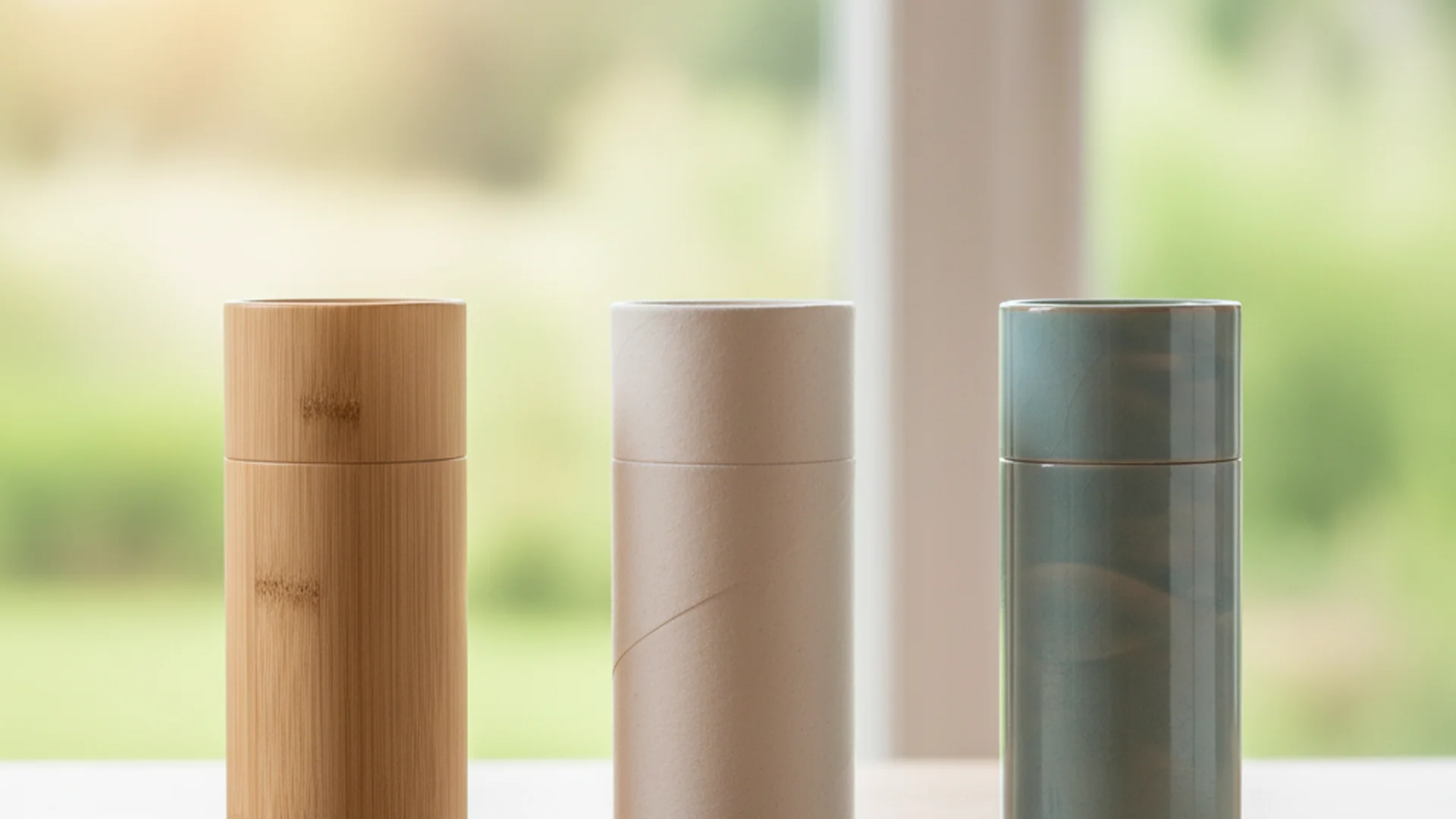
Most modern containers are crafted from recycled paper, cardboard, or bamboo. These materials are chosen not just for their environmental benefits, but for their practicality. They are lightweight, durable enough for transport, and—crucially—capable of being scanned by airport security without being opened.
Why Choose a Scatter Tube Over a Traditional Urn?
Families often opt for these containers because they facilitate participation. In many 2025-2026 memorial trends, multiple family members may want to participate in the scattering process. Small "keepsake" or "mini" tubes allow for the ashes to be shared among several people, each of whom can scatter a portion in a different location or at different times during the service.
Choosing the Right Size and Capacity
One of the most common questions I receive as a funeral director is: "How big of a tube do I actually need?" The industry "Rule of Thumb" is straightforward: 1 pound of healthy body weight equals 1 cubic inch of cremated remains.
For a standard adult, a scattering tube should have a capacity of at least 200 to 230 cubic inches (roughly 3 to 3.5 liters). If you are looking for a container for a child or a pet, or if you only intend to scatter a portion of the remains, "keepsake" sizes are available, typically ranging from 10 to 50 cubic inches.
| Tube Size | Capacity (Cubic Inches) | Best Use Case |
|---|---|---|
| Adult | 200 - 230 | Full scattering for one adult |
| Shared | 350 - 400 | Companion scattering (two adults) |
| Keepsake | 20 - 50 | Small portion scattering or multiple locations |
| Mini | 10 - 15 | Symbolic scattering by children or individuals |
Material Options and 2025 Trends
As we look at trends for 2025 and 2026, the materials used for scattering containers have become more sophisticated.
1. Sustainable Bamboo
Bamboo has become the "premium standard" for scattering urns. Products like the Eco Scattering Urn are highly popular because they are more durable than cardboard, offering a more ceremonial feel. They also feature locking lids, which are vital if you plan to hike to a remote location or perform multiple scatterings throughout a day without the risk of accidental spills.
2. Biodegradable Cardboard
Standard cardboard tubes are the most common choice. They are often wrapped in high-quality imagery, ranging from serene forest scenes to custom "memory maps" showing a person's favorite travel destinations. While most are 100% biodegradable, be aware that high-gloss finishes might take slightly longer to break down in the soil.
3. Tree Burial Integration
A rising trend in 2026 is the integration of scattering with tree planting. Some tubes are now designed as "Bio-Urns." These allow a portion of the ashes to be scattered, while the remaining ashes are placed in a specific compartment at the bottom of the tube that contains a tree seed or sapling, allowing the life of the loved one to continue through nature.
Flying with a Scattering Container
One of the biggest hurdles for families is transporting remains across state or international lines. This is where the material of your scattering tube becomes vital.
Cardboard, bamboo, and plastic scattering tubes are 100% X-rayable. This makes them the preferred choice for air travel. When flying, keep the tube in your carry-on luggage to ensure it remains in your sight and is handled with care.
Best Practices for a Seamless Ceremony
As a Senior Funeral Director, I have witnessed many ceremonies where small technical errors caused unnecessary stress. Follow these expert recommendations for a dignified experience.
The "Wind Check"
The most important rule of scattering is: Stand with the wind at your back. "Blowback" is a common and distressing occurrence where ashes are blown back onto the participants. Use a small feather, a piece of grass, or even a light ribbon to check the wind direction before you begin.
Filling the Tube
Most scattering tubes feature an inner and outer layer. When filling the tube:
- Use a wide-neck funnel to prevent spills.
- Apply a thin line of glue to the rim of the inner tube before sliding the outer cover on.
- Use the provided "air vent" sticker if the tube has one; this prevents the lid from popping off due to air pressure changes during travel.
The Controlled Pour
Instead of "dumping" the remains, think of "sifting." Most modern tubes have a perforated "push-in" tab. Hold the tube with two hands and tilt it gradually. This creates a steady, dignified flow that looks much better in photos and feels more intentional for those watching.
Common Mistakes to Avoid
- Using a Scatter Tube for Water Burial: This is a frequent mistake. Standard tubes are meant for pouring. If you drop a cardboard scatter tube into the water, it may float indefinitely or bob on the surface for a long time, which can be emotionally difficult. Instead, use a dedicated water burial "pillow" urn designed to sink and dissolve. You can learn more about these in our guide on Scattering Ashes at Sea Service (Options and Timeline).
- Forgetting a "Plan B" for the Empty Tube: Families often reach the end of the ceremony and realize they don't know what to do with the empty container. Decide beforehand: will you keep it as a memento, recycle it, or perform a secondary ceremony like burying the tube or burning it (if it is pure cardboard)?
- Assuming Scattering is Illegal: While there are rules, scattering is legal in most places with permission. For national parks, you usually just need a permit. For the ocean, the EPA requires you to be at least 3 nautical miles from shore.
Frequently Asked Questions
Can I keep ashes in a scattering tube indefinitely?
Are all scattering tubes biodegradable?
Can I fly with a scattering tube?
What is the difference between a scattering tube and a water burial urn?
Conclusion
Choosing the right scattering tube is about more than just aesthetics; it’s about ensuring that the final act of farewell is as smooth and respectful as possible. Whether you choose a custom-wrapped cardboard tube for a personalized touch or a sturdy bamboo container for a mountain-top journey, understanding the logistics of size, material, and technique will help you focus on what truly matters: the memory of your loved one.
Ready to Start?
Explore our comprehensive checklists and professional guides for a perfect farewell.
View All GuidesWritten by Julian Rivera
Our team of experts is dedicated to providing compassionate guidance and practical resources for end-of-life planning. We're here to support you with dignity and care.