In modern mourning, the ways we choose to remember our loved ones are becoming as unique as the lives they lived. There has been a clear move away from stationary memorials and toward "portable memorials." Understanding the various types of cremation jewelry is the first step in deciding how you want to carry a piece of your loved one's legacy with you every day.
Whether you are looking for a traditional urn pendant, a discreet ashes ring, or a modern cremation bracelet, these pieces serve as a physical bridge between the past and the present. As cremation has become the most common choice for families across the United States, demand for high-quality, wearable keepsakes has grown alongside it.
The Evolution of Memorialization
Cremation jewelry, also known as "memorial jewelry" or "keepsake jewelry," is not a new concept. Historically, mourning jewelry reached its peak during the Victorian era, when locks of hair were woven into intricate brooches. However, the technology and aesthetics of 2025 and 2026 have transformed this practice into a sophisticated art form.
Today’s designs are so discreet that they often look like high-end fashion pieces. This allows the wearer to choose who they share their story with. For many, these items are vital tools in the "active" grieving process, providing comfort through tactile connection.
Traditional and Modern Types of Cremation Jewelry
When selecting a piece, it is helpful to categorize them by how they are worn and how they hold the remains. Here is an in-depth look at the most common options available today.
1. The Urn Pendant: Close to the Heart
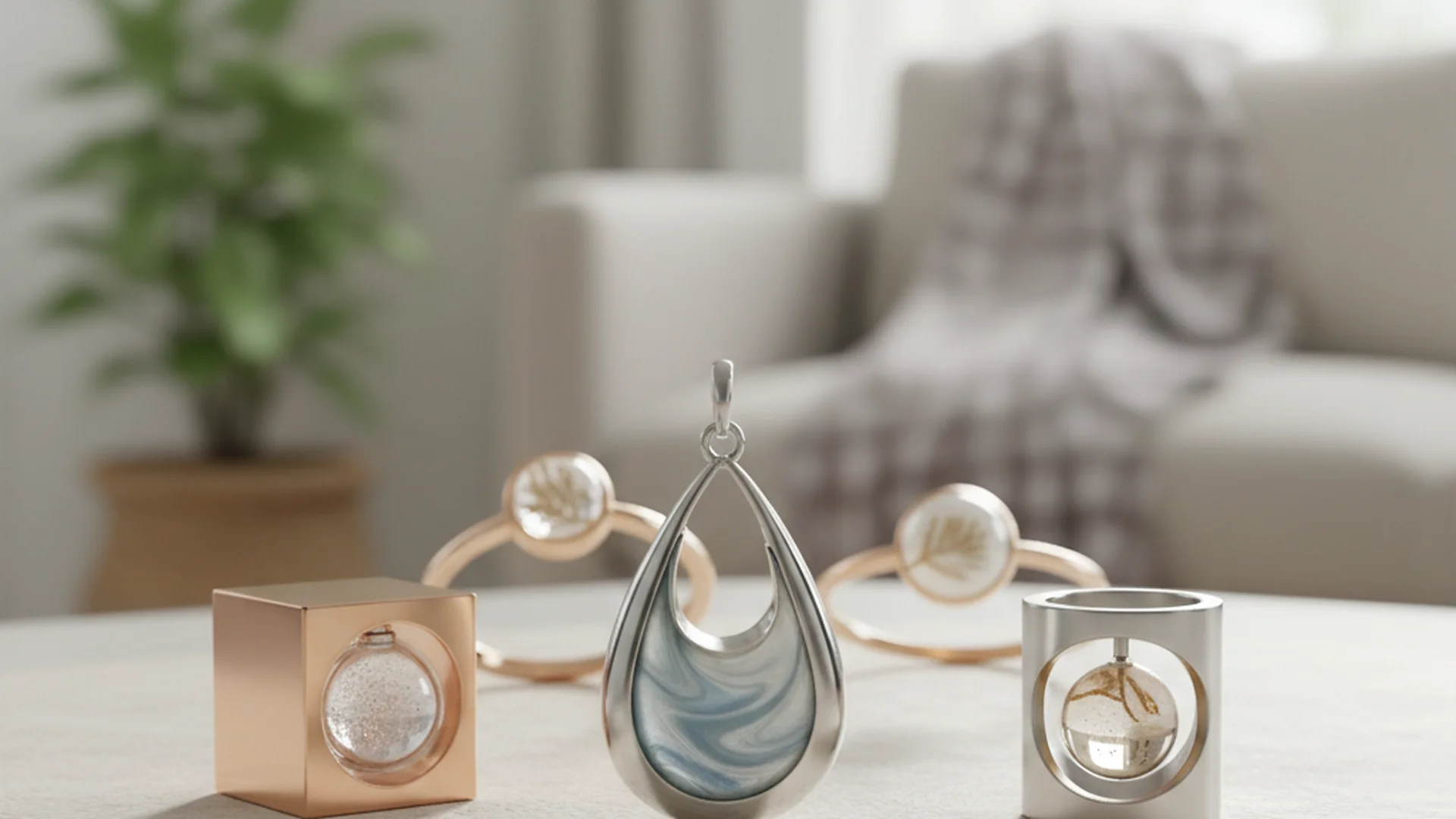
The urn pendant remains the most popular choice for many families. These are hollowed-out charms that hang from a necklace, allowing the remains to rest physically close to your heart.
- Shapes and Styles: You can find these in almost any shape imaginable, from traditional crosses and hearts to modern vertical bars and cylinders.
- Example: A 14k gold "teardrop" pendant is a popular choice for honoring a parent or grandparent — elegant enough for daily wear, with a small sealed compartment at the base for a pinch of ashes.
- Best For: Those who want a visible yet classic symbol of remembrance.
2. The Ashes Ring: Subtle and Personal
An ashes ring is often the preferred choice for those who want a more private memorial. Because the hand is always within the wearer's line of sight, a ring provides a constant, grounding reminder of a loved one.
- Design Variations: Some rings feature a tiny screw on the side of the band, while others have a hollow "bezel" setting where the ashes are placed under a gemstone or synthetic stone.
- Discretion: To the casual observer, an ashes ring looks like a standard wedding band or statement ring.
- Best For: Daily wearers and those who prefer a tactile memorial they can touch throughout the day.
3. The Cremation Bracelet: The 2025 Trend
While pendants have historically dominated the market, cremation bracelets are the leading trend for the 2025–2026 season. This "bracelet boom" is driven by the popularity of stackable jewelry and "charm" style links (similar to Pandora).
- Bangles and Cuffs: Elegant gold or steel bangles can have hidden compartments at the tips.
- Bead Styles: You can purchase individual "cremation beads" that fit onto existing charm bracelets, allowing you to integrate the memorial into your current jewelry collection.
- Best For: Trend-setters and individuals who prefer jewelry that blends seamlessly with other accessories.
4. Resin-Infused Art Jewelry
A departure from the hollow-chamber design, resin jewelry involves mixing a small amount of ashes directly into a high-grade UV resin. This creates a stone-like appearance.
- Visual Appeal: The ashes can be swirled with pigments to create a "galaxy" effect or colored to match a loved one’s birthstone.
- Durability: High-quality resin is incredibly tough, though it must be protected from prolonged direct sunlight to prevent yellowing over time.
- Success: Using resin allows for a completely waterproof seal, as the ashes are encased within the solid material rather than a hollow cavity.
5. Cremation Diamonds: The Premium Legacy
For those seeking a permanent heirloom, lab-grown cremation diamonds are the fastest-growing premium segment. Scientists extract the carbon from the remains and use high-pressure, high-temperature (HPHT) machines to grow a real diamond.
- Value: These are chemically identical to mined diamonds and can be passed down through generations.
- Customization: You can choose the cut, color, and carat weight.
- Warning: Always ensure you receive a Certificate of Authenticity (GIA or IGI) to verify the diamond's origins.
Materials Matter: Selecting the Right Metal
The material you choose impacts both the price and the longevity of the piece. It is wise to consider your lifestyle before purchasing.
| Material | Durability | Maintenance | Best For... |
|---|---|---|---|
| 316L Stainless Steel | High (Hypoallergenic) | Low | Daily wear; active lifestyles. |
| 14k Gold | High | Low | Heirloom quality; permanent wear. |
| Sterling Silver | Medium | High (Tarnishes) | Occasional wear; budget-friendly. |
| Glass/Resin | Medium | Moderate | Artistic, colorful designs. |
Practical Considerations and Best Practices
Choosing from the many types of cremation jewelry is only the first step. You must also consider the practical side of handling remains and maintaining the piece.
How Much Ash is Needed?
One of the most common misconceptions is that you need a large amount of remains. In reality, you only need a tiny amount—usually about the size of a grain of rice or a pinch of salt. Because of this, one person’s remains can provide enough for dozens of family members to have their own individual jewelry pieces.
Who Fills the Jewelry?
Most jewelry comes with a small filling kit (a tiny funnel and a pin).
- Self-Filling: Many find this to be a cathartic, closing act of service for their loved one.
- Professional Help: If you feel uncomfortable handling the remains, most funeral directors will fill the jewelry for you as part of their service.
Securing the Seal
This is the most critical step in maintaining your jewelry.
Always use a tiny drop of industrial-grade glue (like Loctite) on the threads of the screw before the final tightening. This ensures the compartment is permanently sealed.
2025–2026 Trends: The Future of Memorials
The industry is evolving rapidly with new technologies and a focus on sustainability.
- 3D Printed Customization: Families can now design jewelry that reflects a loved one’s specific hobby—for example, a 3D-printed urn pendant shaped like a vintage camera for a professional photographer.
- Sustainable Metals: There is a move toward using 100% recycled gold and silver, reflecting a broader consumer movement toward eco-friendly mourning practices.
- Handwritten Engravings: Using laser engraving, many people are now adding a loved one’s actual signature or a "love note" from an old card onto the surface of the jewelry.
What to Watch Out For
Even with the best intentions, it is easy to make mistakes when purchasing memorial items. To ensure your keepsake lasts a lifetime, avoid these common pitfalls:
- Thinking it’s Waterproof: Most hollow-chamber jewelry is water-resistant, not waterproof. Even with glue, prolonged exposure to chlorine or salt water can degrade the metal or the sealant.
- Using Ultrasonic Cleaners: While great for standard diamonds, the vibrations from an ultrasonic cleaner can shake a sealed screw loose or crack resin-infused pieces. Stick to a soft, lint-free cloth.
- Forgetting Documentation: If you are buying a premium item like a cremation diamond, ensure you have the proper grading reports.
- Buying "Plated" Metals for Daily Wear: Gold-plated or silver-plated jewelry will eventually wear down to the base metal (often brass), which can turn skin green and ruin the aesthetic of the piece.
What matters: Choosing a solid metal like 14k gold ensures that the piece can be polished and refurbished for decades without losing its color.
Frequently Asked Questions
Is cremation jewelry waterproof?
Can I put other things inside besides ashes?
How do I know the jewelry won't open?
Do cremation ashes smell?
Conclusion: Making Your Choice
Choosing between the various types of cremation jewelry is an intimate journey. Whether you find comfort in the weight of an urn pendant against your chest, the constant presence of an ashes ring on your finger, or the modern elegance of a cremation bracelet, these pieces serve as a testament to a life well-lived.
As we look toward 2026, the focus remains on personalization and quality. By selecting durable materials and following proper sealing techniques, you ensure that your loved one's memory is preserved in a beautiful, wearable form.
When budgeting for a memorial, it helps to compare quotes from several reputable providers and ask exactly how the ashes are sealed and verified. For related ideas on memorializing a loved one, see our guides on what to do with cremated remains and ashes turned into glass.
Explore Your Options
Learn more about memorialization options for cremated remains.
Read the Ashes Guide- 1
- 2
- 3
- 4
- 5
Informational Purposes Only
This article is for informational purposes only and does not constitute legal, medical, or financial advice. Laws, costs, and requirements vary by location and individual circumstances. Always consult a qualified legal, medical, or financial professional for advice specific to your situation.
Written by
Matt Morgan
Founder & Editor
Matt Morgan is the founder and editor of End of Life Tools, where he researches end-of-life topics from primary public sources and writes plain-language guides. General information only — he is not a licensed professional, and this is not professional advice.
View full profile →Put it into action
Found this helpful?
Explore our free-to-use planning tools to put what you learned into action.