Key Takeaways
- Metal caskets are categorized by gauge, while wood caskets vary by species and finish.
- Modern trends are shifting toward eco-friendly materials and online purchasing for transparency.
- The FTC Funeral Rule protects your right to buy a casket from any third-party source.
Choosing the right final resting place for a loved one is one of the most significant decisions a family makes during the funeral planning process. With the wide variety of types of caskets available in 2025, the choice often involves balancing personal aesthetics, durability, environmental values, and budget. Whether you are pre-planning your own arrangements or navigating the loss of a family member, understanding the nuances of casket materials and styles is essential for making an informed, dignified decision.
As we move into 2025 and 2026, the industry is seeing a major shift. While traditional metal and wood remain popular, there is a surging interest in sustainable "green" options and personalized designs. This guide will walk you through every available option, providing the technical details and market insights you need to navigate this sensitive purchase.
Understanding Metal Caskets: Durability and Protection
Metal caskets are the most common choice in North America, largely due to their perceived durability and the wide range of finishes available. When people search for casket options, they often start here because metal offers a sleek, modern appearance and features that wood cannot provide, such as sealing gaskets.
Steel Caskets and Gauges
Steel caskets are categorized by "gauge," which refers to the thickness of the metal. It is important to remember that with gauges, a lower number represents a thicker metal.
- 16-Gauge Steel: This is the premium level of carbon steel. It is the thickest and most durable option, often featuring high-end hardware and reinforced corners.
- 18-Gauge Steel: This is the "industry standard" for mid-range burials. It is thick enough to offer significant structural integrity and is often the choice for families seeking a balance between cost and quality.
- 20-Gauge Steel: The most affordable metal option. While thinner and lighter than 18-gauge, it remains a sturdy choice for traditional burial.
Semi-Precious Metals: Copper and Bronze
For those looking for the highest tier of casket styles, semi-precious metals like copper and bronze are the gold standard. Unlike carbon steel, these metals are naturally rust-resistant and do not contain iron.
- Bronze: Frequently considered the most durable and "statue-like" material. It is measured by weight (usually 32oz or 48oz per square foot).
- Copper: Valued for its natural beauty and longevity. Over time, copper develops a protective patina, though most burial caskets are finished with a clear coat to maintain their original shine.
Stainless Steel
Stainless steel offers a middle ground between carbon steel and semi-precious metals. It contains chromium and nickel, which provides significantly higher resistance to rust and corrosion than standard steel, but at a lower price point than solid bronze.
Wood Caskets: Natural Beauty and Warmth
Many families prefer the organic, warm feel of wood over the industrial look of metal. Wood caskets are often viewed as more traditional and "furniture-like," fitting well into religious or classic funeral services. For a deeper dive into the comparison, you can read our article on Metal Caskets vs Wood Caskets.
Solid Hardwoods
Hardwood caskets are crafted from slow-growing trees with dense grain patterns. These are the most expensive wood options due to the time required for the timber to mature and the craftsmanship involved in finishing the wood.
- Mahogany: The premier hardwood, known for its deep reddish-brown color and prestige.
- Cherry and Walnut: Highly sought after for their rich tones and ability to take a high-polish finish.
- Oak and Maple: Durable and classic choices that offer distinct, prominent grain patterns.
Softwoods and Affordable Options
If you prefer the look of wood but are working within a tighter budget, softwoods or engineered woods are excellent casket materials.
- Pine and Cedar: These are often used for "natural" or "country-style" looks. Pine is also the traditional choice for Jewish "Arons," which must be made entirely of wood and biodegradable materials.
- Poplar: A versatile wood that can be stained to look like more expensive hardwoods like cherry or oak.
- Veneer: A veneer casket consists of a thin layer of real hardwood bonded to a core of fiberboard or plywood. This provides the luxury look of a solid oak casket at a fraction of the weight and cost.
The Rise of Eco-Friendly and Green Options
A significant trend for 2025 is the "Green Revolution." With 91% of consumers now considering the environmental impact of their end-of-life choices, biodegradable casket options are moving from the fringe to the mainstream.
Biodegradable Materials
These caskets are designed to return to the earth naturally, often intended for use in "Conservation Cemeteries" or "Green Burial" grounds.
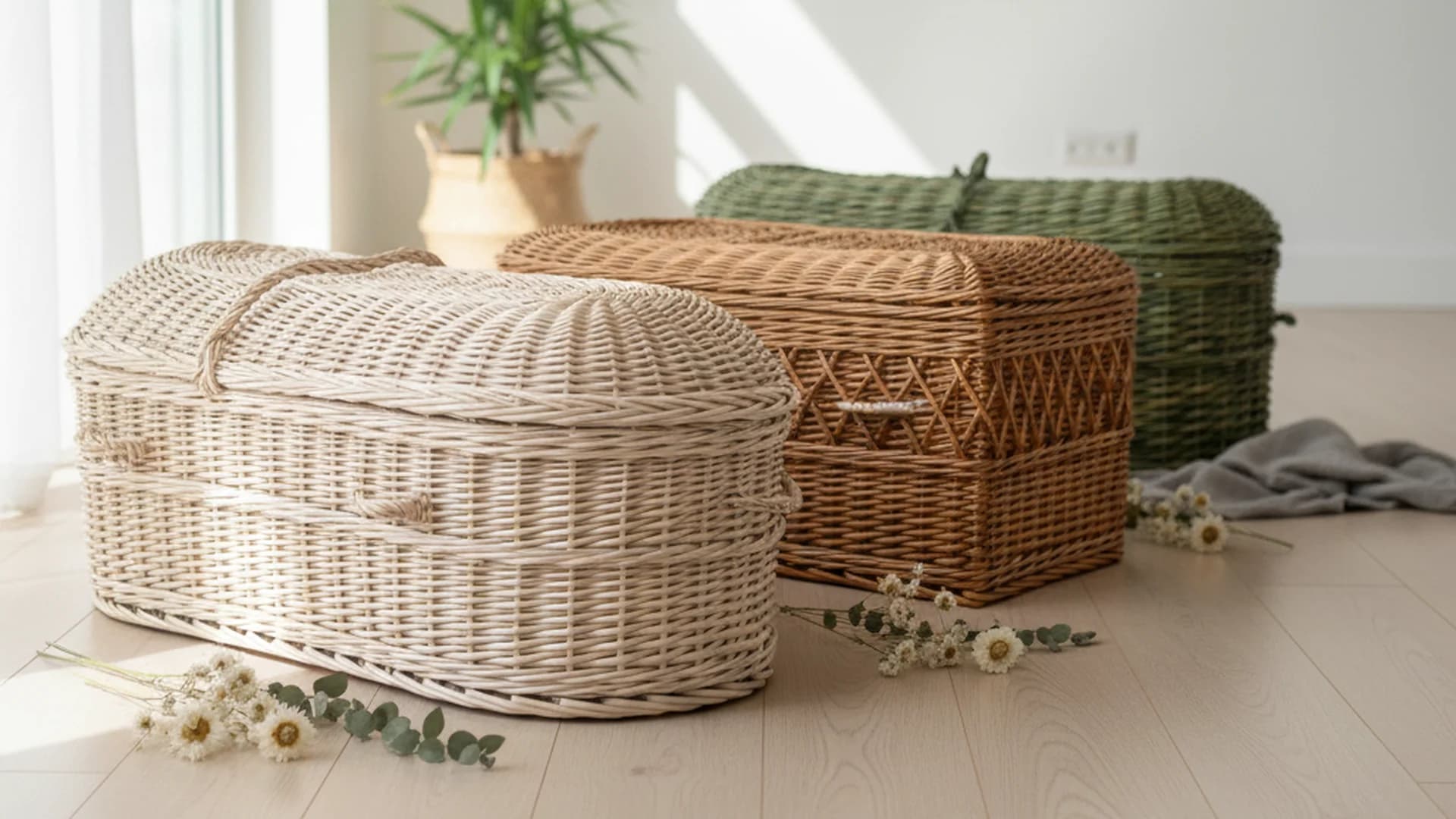
- Wicker, Willow, and Seagrass: These are hand-woven from sustainable plants. They provide a soft, natural aesthetic and are completely biodegradable.
- Bamboo: A rapidly renewable resource that is both sturdy and environmentally friendly.
- Cardboard and Fiberboard: These are the most affordable options, often used for direct cremation. To learn more about this specific style, see our guide on Cardboard Caskets.
Mycelium (Mushroom) Caskets
An emerging trend for 2025–2026 is the "Living Cocoon." These are grown from mycelium (the root structure of mushrooms). Not only are they biodegradable, but they actively help neutralize toxins in the body and accelerate the decomposition process, enriching the surrounding soil.
Comparing Casket Styles and Interior Features
Beyond the exterior material, the "style" of a casket is defined by its lid design and its interior lining. These features contribute to the overall presentation during a viewing or wake.
Lid Designs
- Half-Couch: The lid is split into two sections. Only the top half is opened for viewing the head and torso of the deceased. This is the most common style in the United States.
- Full-Couch: The lid is a single piece that opens entirely. While less common for viewings, it provides a grander, more traditional appearance.
Interior Fabrics
The lining of the casket is where the deceased rests. The choice of fabric can significantly impact the final price.
| Fabric Type | Quality Level | Common Use Cases |
|---|---|---|
| Crepe | Economical | Standard steel and veneer caskets; modest budget. |
| Satin | Mid-Range | 18-gauge steel and hardwoods; classic look. |
| Velvet | Premium | Solid bronze, mahogany, and high-end hardwoods. |
| Linen | Specialty | Green burial caskets and modern designs. |
Market Realities: Costs and Buying Trends
Understanding the financial landscape is crucial. In the past, families bought whatever the funeral home had in stock. Today, online transparency has changed the game.
Average Casket Costs (2025 Estimates)
- Standard Steel (20-Gauge): $1,000 – $2,500
- Mid-Range Steel (18-Gauge): $2,500 – $4,500
- Solid Hardwood (Oak/Cherry): $3,000 – $6,000
- Premium Metal (Bronze/Copper): $5,000 – $12,000+
- Eco-Friendly (Wicker/Cardboard): $600 – $2,500
The FTC Funeral Rule
You have the legal right to purchase a casket from a third-party retailer (like an online store) and have it delivered to your funeral home. Under the FTC Funeral Rule, the funeral home:
- Cannot refuse to handle a casket you bought elsewhere.
- Cannot charge you a "handling fee" for doing so.
- Cannot require you to be present when the casket is delivered.
For a detailed breakdown of how to navigate this process, read our article on Buying Casket Online vs Funeral Home.
Real-World Examples of Casket Selection
To better understand how these types of caskets fit different needs, let’s look at three common scenarios:
- The Budget-Conscious Family: The Miller family wanted a traditional burial but had a strict budget. They chose a 20-gauge steel casket with a crepe interior. By purchasing it online and having it delivered, they saved $1,800 over the funeral home’s price, allowing them to allocate more funds to the memorial service.
- The Environmentally Focused Individual: Sarah pre-planned her funeral and requested a "green burial." She selected a hand-woven willow casket. Since her local cemetery didn't offer green burial, she found a conservation cemetery nearby that permitted biodegradable materials without a vault.
- The Personalized Tribute: For a lifelong car enthusiast, a family chose a custom-wrapped metal casket featuring a metallic finish and custom corner pieces that resembled vintage car ornaments. This "hyper-personalization" is a major trend in 2025.
Common Mistakes to Avoid
When choosing between different casket options, it is easy to make decisions based on emotion rather than fact. Here are the most common pitfalls:
- Believing the "Preservation" Myth: Many people buy expensive gasketed (sealed) caskets because they think it will preserve the body forever. Fact: No casket can stop natural decomposition. In fact, sealing moisture inside can sometimes accelerate certain types of decay.
- Ignoring Sizing Requirements: A standard casket is approximately 28 inches wide. If the deceased was larger, an "oversized" casket may be necessary to ensure a dignified fit. Not accounting for this can lead to stressful, last-minute changes. See our Casket Sizing Guide for help.
- Not Checking Cemetery Bylaws: You might buy a beautiful biodegradable wicker casket only to find your cemetery requires a concrete outer burial container (vault). Always check the cemetery's rules before finalizing a casket purchase.
Frequently Asked Questions
What is the difference between a casket and a coffin?
Do I have to buy the casket from the funeral home?
Is a casket required for cremation?
Why do some caskets cost $10,000 while others cost $1,000?
Is a burial vault required by law?
Conclusion
Choosing from the various types of caskets is a deeply personal decision that reflects the life of the deceased and the values of the family. Whether you opt for the enduring strength of an 18-gauge steel casket, the timeless warmth of solid oak, or the forward-thinking sustainability of a mushroom-based "Living Cocoon," the most important factor is that the choice provides peace of mind.
In 2025, you have more power as a consumer than ever before. Use the available online resources to compare prices, understand your rights under the FTC Funeral Rule, and ensure you are not overspending during a difficult time. By planning ahead and doing your research, you can honor your loved one with a beautiful, appropriate tribute that fits your family's needs and budget.
Need More Guidance?
Explore our complete library of burial and funeral planning resources to make the best choice for your family.
View All GuidesWritten by David Montgomery
Our team of experts is dedicated to providing compassionate guidance and practical resources for end-of-life planning. We're here to support you with dignity and care.