Key Takeaways
- Personalized urns are now the industry standard, with over 55% of families requesting custom details.
- The "Rule of Three" (Name, Dates, Heart Line) provides the most balanced and readable design.
- Emerging technologies like QR codes and 3D printing are revolutionizing how we store digital legacies on physical memorials.
Choosing a final resting place for a loved one is a deeply personal journey. As cremation rates continue to climb—projected to reach 63.4% in 2025—the focus has shifted from simply selecting a vessel to creating a unique tribute. Urn engraving options have evolved significantly, moving beyond simple names and dates to include high-definition imagery, digital legacies, and bespoke artistry.
Creating a personalized urn is more than just an aesthetic choice; it is an act of storytelling. In my work as a death doula, I have seen how the process of selecting the perfect words or symbols can provide a profound sense of closure for grieving families. This guide explores the technical possibilities, design best practices, and the latest trends to help you navigate the process of designing a custom urn.
Why Personalization Matters in 2025
The modern funeral industry is witnessing a significant shift. Personalization is no longer considered an "extra" or a luxury; it has become the standard for modern memorialization. Approximately 55% of families now request some form of customization on their chosen urn. This demand is driving the global cremation urn market, which is valued at approximately $0.74 billion in 2025.
A personalized urn serves as a permanent marker of a life well-lived. Whether the urn will be placed in a home, a columbarium, or a burial plot, engraving ensures that the identity and spirit of the individual are preserved for future generations.
Understanding Your Urn Engraving Options
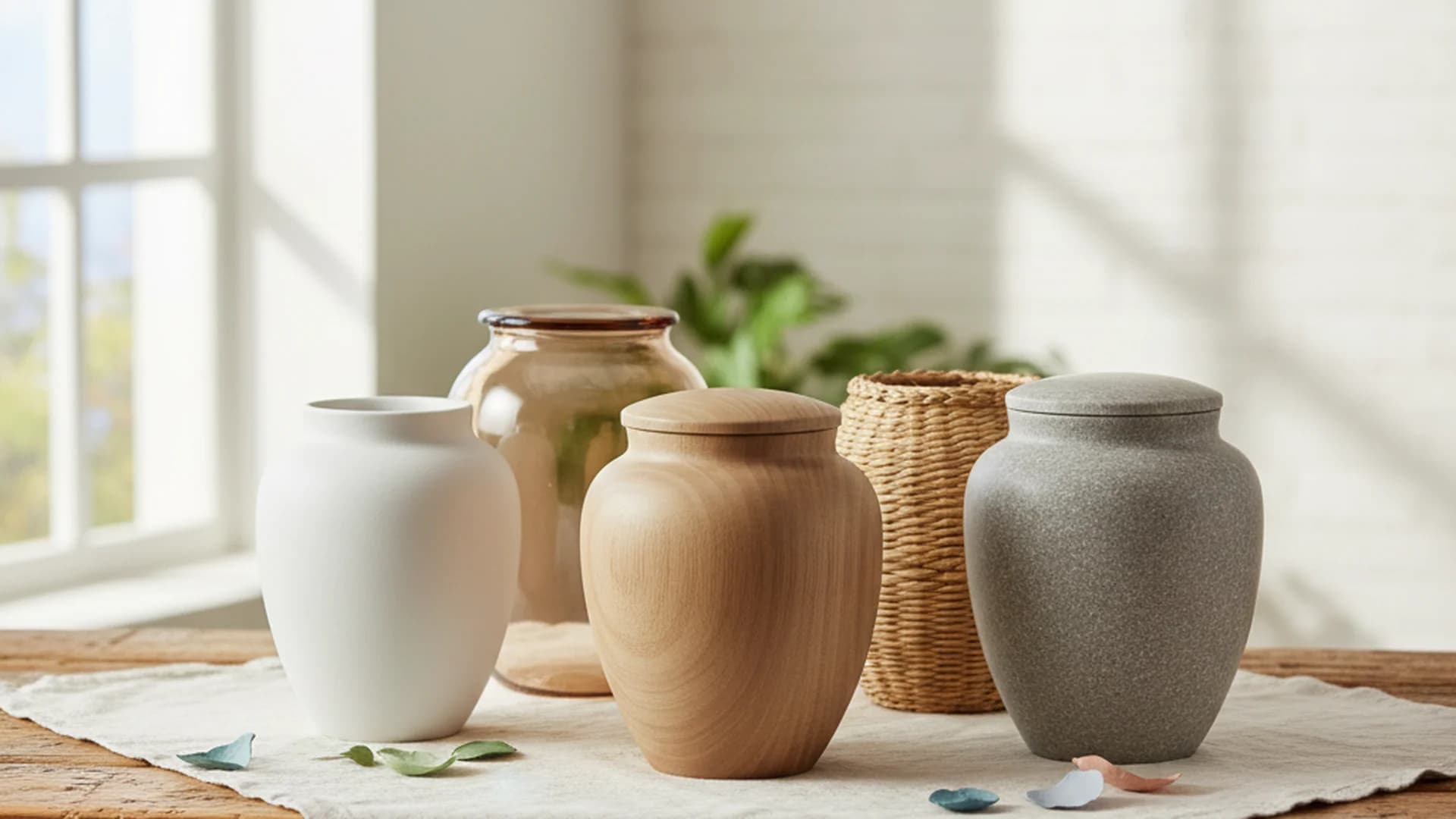
When we talk about urn engraving options, we are referring to several different technical methods. The material of the urn—whether it is metal, wood, stone, or glass—dictates which method will yield the best results.
Laser Engraving
This is the most popular and versatile method in the industry today. Laser engraving can produce details as fine as 0.1mm, making it the preferred choice for high-resolution text, intricate symbols, and even etched photographs. It is incredibly durable and works beautifully on wood and most metals.
Rotary Engraving
A more traditional method, rotary engraving uses a physical drill bit to carve into the surface. This creates a deep, tactile groove that is often filled with paint or gold leaf to enhance visibility. It is exceptionally permanent and works best on metals like brass and aluminum.
Sandblasting
For natural stone and marble urns, sandblasting is the gold standard. Because stone can be unpredictable under a laser, sandblasting uses pressurized air and abrasive materials to etch deep, legible designs into the surface.
Hanging Medallions and Nameplates
If you have chosen a fragile material, such as hand-blown glass or thin-walled ceramic, direct engraving may not be possible. In these cases, families often choose a pendant or nameplate medallion that hangs from the neck of the urn or adheres to the base.
Material Compatibility Guide
Choosing the right material is the first step in ensuring your engraving looks professional and remains legible for decades.
| Material | Best Engraving Method | Durability | Notes |
|---|---|---|---|
| Brass/Metal | Laser or Rotary | High | Very legible; high contrast options available. |
| Wood | Laser | Medium | Creates a beautiful "burnt-in" natural look. |
| Marble/Stone | Sandblasting | High | Requires deep etching for readability. |
| Ceramic/Glass | Hanging Medallion | Variable | Direct engraving risks shattering the material. |
| Biodegradable | Embossing/Natural Dyes | Low | Designed to break down; uses eco-friendly ink. |
Design Best Practices: The "Rule of Three"
One of the most common challenges families face is deciding what to write. To avoid a cluttered or illegible design, memorial experts suggest following a three-part hierarchy for inscriptions:
- The Anchor Detail: The individual’s full name. This should be the largest text on the urn.
- The Context Detail: The birth and passing dates. Use a consistent format (e.g., "1950 – 2025").
- The Heart Line: A short, meaningful phrase or epitaph (e.g., "Always in our thoughts" or "A life of grace").
Prioritize Legibility Over Length
A common mistake is trying to fit a long poem or a detailed biography on the surface of an urn. Most adult urns have a standard limit of 3–4 lines of text with a maximum of 30–40 characters per line.
Real-World Examples of Custom Urns
To visualize how these urn engraving options come together, consider these three modern approaches:
- The Musician’s Tribute: A high-polish black brass urn featuring a laser-etched image of a guitar, the individual's name in a clean sans-serif font, and a single line of sheet music from their favorite song.
- The Hiker’s Minimalist Urn: A cherry wood urn with a simple, minimalist botanical sketch of a mountain range, paired with modern typography and a matte finish to reduce glare.
- The Digital Legacy Urn: A stainless steel urn featuring a discreet QR code medallion on the back. When scanned, the code opens a video tribute and a photo gallery of the deceased’s life travels.
Emerging Trends for 2025–2026
The world of memorialization is embracing technology and sustainability at an unprecedented rate.
QR Code Digital Memorials
One of the fastest-growing trends is the integration of QR code medallions. These small, discreet codes can be scanned by any smartphone to open a digital biography, a family photo gallery, or even a Spotify playlist of the loved one’s favorite music. This allows the physical urn to remain minimalist while holding an infinite amount of information.
3D-Printed Bespoke Urns
Technology now allows for a custom urn to be 3D-printed in virtually any shape. This might include a person’s favorite classic car, a specific model of a sailboat, or even a lifelike bust of the individual. These are often painted or finished to look like traditional materials while offering unparalleled personalization.
Eco-Friendly Engraving
As "green" funerals gain popularity, families are opting for biodegradable urns made of salt, sand, or mulberry paper. Instead of traditional inks or deep carving, these urns use natural dyes or pressure-embossing to ensure the entire memorial remains 100% sustainable.
Common Mistakes to Avoid
- The "All-Caps" Script Error: Script fonts are designed to flow. When forced into all-caps, they become nearly impossible to read.
- Overlooking Viewing Distance: If the urn will be placed high on a shelf or behind glass in a columbarium, thin engraving will disappear. Choose bold, deeply cut letters for high-placement urns.
- Date Inconsistency: Ensure you choose one style and stick to it (e.g., don't mix "Jan 4, 1950" with "10/12/2025" on the same surface).
- Ignoring the Finish: High-polish metal urns can be hard to read due to light glare. If readability is your top priority, choose a matte finish or a high-contrast engraving (like silver text on a dark blue urn).
Frequently Asked Questions
What can actually be engraved on an urn?
How long does the engraving process take?
Can I engrave an urn I already purchased?
Is engraving permanent?
Conclusion
Selecting from the many urn engraving options available today allows you to create a personalized urn that truly reflects the essence of your loved one. Whether you choose a classic inscription on a brass vessel or a modern QR-integrated memorial, the goal is to create a lasting tribute that brings comfort to those left behind.
By following the "Rule of Three," prioritizing legibility, and choosing the right material, you can ensure that this final act of love is both beautiful and enduring. If you are also considering smaller tributes for family members, you may want to explore our guide on Keepsake Urns Explained: What to Choose, What to Avoid, and Budget Tips.
Need Assistance?
Contact our team today for a consultation on custom memorial designs.
Get Expert AdviceWritten by Amara Okafor
Our team of experts is dedicated to providing compassionate guidance and practical resources for end-of-life planning. We're here to support you with dignity and care.